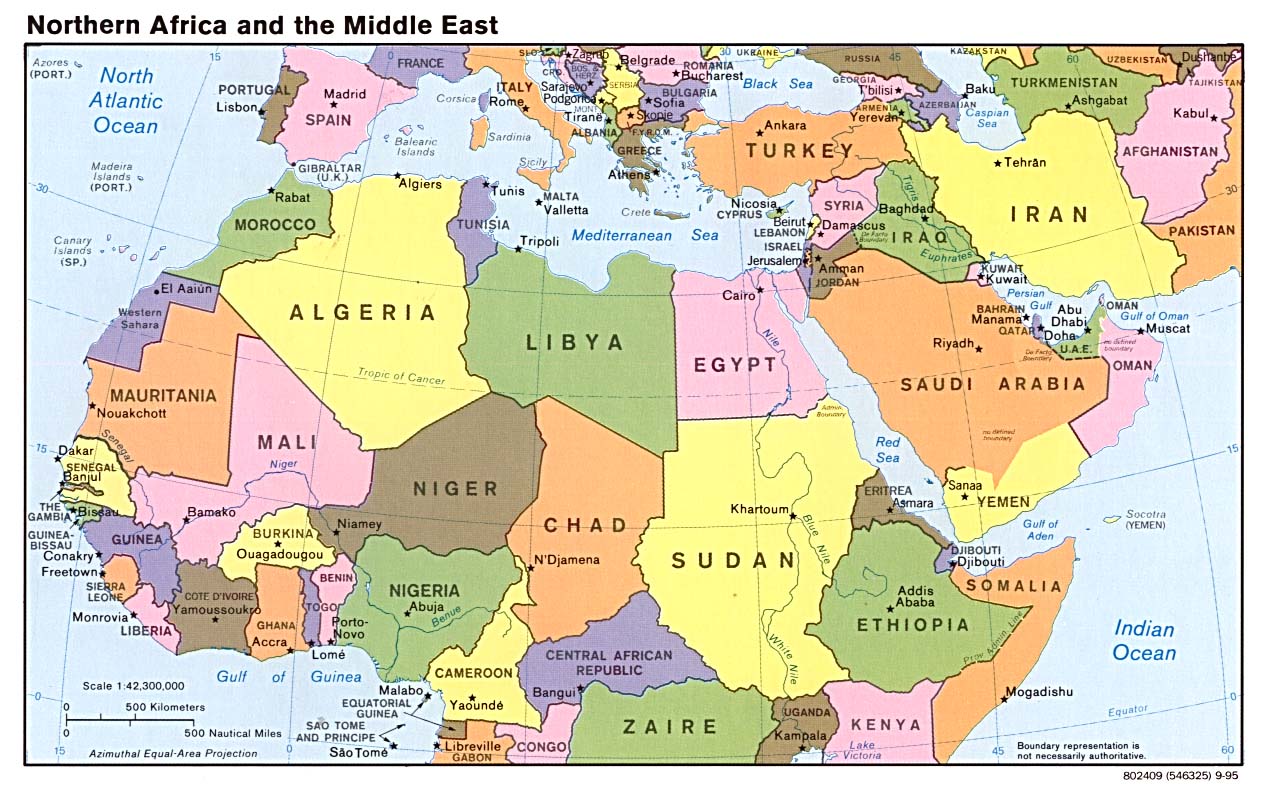
Slideshow of Liberia and Sierra Leone
Since I've written on the problems in Liberia, I was really pleased to see this slideshow called Keeping the Peace that was put together by a photographer from Slate. It gives an excellent background to the issues these people face in recreating their country after years of civil war.
Saturday, December 27, 2003


Wednesday, December 24, 2003
The (Canadian Government's) Twelve Days of Christmas
A cute article I found in the Toronto Star today.
A cute article I found in the Toronto Star today.
Are you on the NRA's blacklist?
There are some things I run across in the course of a day that are far too good to pass up -- this is definitely one of them. I came across a list of organizations apparently blacklisted by the NRA for having supported 'anti-gun' legislation. The list is lengthy, including organizations, people and media, but I thought I'd highlight just a few of the organizations that they are targeting:
- AARP
- American Academy of Pediatrics
- American Federation of Teachers
- American Medical Association
- American Bar Association
- American Nurses Association
- Children's Defense Fund
- NAACP
- Southern Christian Leadership Conference
- Unitarian Universalist Association
- United States Catholic Conference
- United Methodist Church
- The YWCA of the USA
My question is this: what type of organization thinks it's a good idea to blacklist the Children's Defense Fund? In addition, you would think that if all of these organizations oppose your views in some way it might prompt you to wonder if you're on the right side of these issues. Take a look at the list yourself though, you never know when you or an organization you work for might show up... :)
There are some things I run across in the course of a day that are far too good to pass up -- this is definitely one of them. I came across a list of organizations apparently blacklisted by the NRA for having supported 'anti-gun' legislation. The list is lengthy, including organizations, people and media, but I thought I'd highlight just a few of the organizations that they are targeting:
- AARP
- American Academy of Pediatrics
- American Federation of Teachers
- American Medical Association
- American Bar Association
- American Nurses Association
- Children's Defense Fund
- NAACP
- Southern Christian Leadership Conference
- Unitarian Universalist Association
- United States Catholic Conference
- United Methodist Church
- The YWCA of the USA
My question is this: what type of organization thinks it's a good idea to blacklist the Children's Defense Fund? In addition, you would think that if all of these organizations oppose your views in some way it might prompt you to wonder if you're on the right side of these issues. Take a look at the list yourself though, you never know when you or an organization you work for might show up... :)
Issues of Church and State
As an addendum to my previous writing on the French banning overt religious paraphernalia from schools, I realized that the issue could also be characterized in the same way as the 10 Commandments in a courthouse. The latter is an explicit attempt to proselytize in a public space, but in a way, so is the former. The only difference is that one is promoting Christianity, whereas the other is promoting atheism or agnosticism.
When it comes to issues of church and state though, I find that there are middle grounds. For instance, I just came across a story about 'faith-based' prisons in the Christian Science Monitor today. I'm not all that happy with this particular program, run by Inner Change Freedom Initiative, because it only teaches from a Christian perspective and its benefits are unclear at best. However, I can't oppose faith-based programs in general for prisons because there is a chance, if properly instituted, that they could play a positive role in the lives of people who might otherwise be lost to society. That being said, it is important that these programs be focused for the benefit of the prisoners, not for the gain of a particular religious group looking for additional members.
Finally, and this is just an unrelated story that I wanted to mention, it's ironic that, given their people's history, Israel would be so into ensuring that foreign workers don't have relations with Israeli women. You'd think of all people that they would be a little more sensitive to issues of 'racial purity.'
As an addendum to my previous writing on the French banning overt religious paraphernalia from schools, I realized that the issue could also be characterized in the same way as the 10 Commandments in a courthouse. The latter is an explicit attempt to proselytize in a public space, but in a way, so is the former. The only difference is that one is promoting Christianity, whereas the other is promoting atheism or agnosticism.
When it comes to issues of church and state though, I find that there are middle grounds. For instance, I just came across a story about 'faith-based' prisons in the Christian Science Monitor today. I'm not all that happy with this particular program, run by Inner Change Freedom Initiative, because it only teaches from a Christian perspective and its benefits are unclear at best. However, I can't oppose faith-based programs in general for prisons because there is a chance, if properly instituted, that they could play a positive role in the lives of people who might otherwise be lost to society. That being said, it is important that these programs be focused for the benefit of the prisoners, not for the gain of a particular religious group looking for additional members.
Finally, and this is just an unrelated story that I wanted to mention, it's ironic that, given their people's history, Israel would be so into ensuring that foreign workers don't have relations with Israeli women. You'd think of all people that they would be a little more sensitive to issues of 'racial purity.'
Thursday, December 18, 2003
The next big thing
According to the New Scientist, Google announced today that it will offer a service allowing searches within about 60,000 books in addition to the web. This comes off of Amazon's introduction of their Search Inside The Book service, which has catalogued a large number of the books they sell. If these schemes work out, it could be a boon for researchers.
According to the New Scientist, Google announced today that it will offer a service allowing searches within about 60,000 books in addition to the web. This comes off of Amazon's introduction of their Search Inside The Book service, which has catalogued a large number of the books they sell. If these schemes work out, it could be a boon for researchers.
Your Say
So do you think I'm a Birkenstock-wearing, tree-hugging commie, or a Third-Way traitor who will be first against the wall when the revolution happens? Have you say in the Guestbook!
So do you think I'm a Birkenstock-wearing, tree-hugging commie, or a Third-Way traitor who will be first against the wall when the revolution happens? Have you say in the Guestbook!
Wednesday, December 17, 2003
On Religious Freedom
This is an interesting story that hasn't really been picked up by North American news agencies as much as I think it should, given that it speaks to a general issue of the relationship between church and state. France is planning to pass legislation banning any type of 'conspicuous religious signs' in public schools, including Muslim headscarves, Jewish Yarmulkes, and large Christian crosses, though discreet symbols of faith will continue to be allowed. This bill is being promoted under the banner of state secularism, as French President Chirac notes, "Secularism is one of the great successes of the Republic. It is a crucial element of social peace and national cohesion. We cannot let it weaken."
After a little deliberation, I've decided that I oppose this idea. According to the article, the benefits of the bill are described as bringing social cohesion to France, eliminating a symbol of women's repression in the headscarf and forcing integration by the large Muslim immigrant community. However, I believe that there are fundamental flaws in each of these arguments.
Firstly, I believe that this bill will bring social fragmentation, as groups attempting to preserve their identity are likely to withdraw from the system since it creates the decision for young women of either disobeying their religion or not attending school. Furthermore, it is likely that to compensate for this problem the Muslim community will set up their own private schools, further isolating the community from the rest of the cultural environment and possibly leading to a situation where hardline Islam is being taught to young children.
Secondly, with regards to the symbol of women's repression there are two issues. First is whether it is a symbol of women's repression at all. I have heard many Muslim women interviewed that do not see it as such, but only as a symbol of being faithful to Islam. There is no question that Islam, like Christianity and Judaism, is a patriarchal religion -- mostly because it was created in a time when the idea of women's rights and equality did not exist. However, that does not mean that it can not be adapted to modern social standards; an act that will only be facilitated though by participating in larger secular society. Second, one has to remember that outside of social and family pressures, these women are not forced to wear the headscarves if they choose. France is not Iran, where it is required by law for women to dress 'appropriately.' It is therefore, outside these pressures, a choice made by these women who want to practice the Muslim faith. Although the pressures to conform can be great, there is no reason why any Muslim woman can't refuse to wear these headscarfs if she believes that it is a symbol of women's subjugation.
Finally, there is the question of integration. This is a little more of a sticky issue, since unlike Canada, France has no history of promoting multiculturalism. In Canada integration would not be as much of an issue because our system promotes the differences between immigrants. However, this is not the case in France. Thus we are left with the somewhat distasteful question of how to fold Muslim culture into the wider French culture. Given that I disagree with the premise by which this is needed, I do not have any ideas for how this can be done.
I feel that I have to differentiate this issue with other church/state issues in which I have come to the opposite conclusion, such as the placement of the 10 Commandments in public place. The difference between these two issues is that the French example deals with an individual's right to practice and express their religion, whereas the 10 Commandments case deals with the state promoting a particular religion over another. I have no issue protecting an individual's right to their freedom of expression and religion, but I am utterly opposed to the state itself directly or indirectly promoting a specific religion over all others, as is the case when you put religious icons in courthouses. The latter, instead of empowering and promoting religious freedom, only makes the United States look like the Christian version of Iran.
Unfortunately, this French legislation seems to be a reactionary responce to the problems associated with immigration, and I'm afraid that it will acheive the exact opposite of what is intended.
This is an interesting story that hasn't really been picked up by North American news agencies as much as I think it should, given that it speaks to a general issue of the relationship between church and state. France is planning to pass legislation banning any type of 'conspicuous religious signs' in public schools, including Muslim headscarves, Jewish Yarmulkes, and large Christian crosses, though discreet symbols of faith will continue to be allowed. This bill is being promoted under the banner of state secularism, as French President Chirac notes, "Secularism is one of the great successes of the Republic. It is a crucial element of social peace and national cohesion. We cannot let it weaken."
After a little deliberation, I've decided that I oppose this idea. According to the article, the benefits of the bill are described as bringing social cohesion to France, eliminating a symbol of women's repression in the headscarf and forcing integration by the large Muslim immigrant community. However, I believe that there are fundamental flaws in each of these arguments.
Firstly, I believe that this bill will bring social fragmentation, as groups attempting to preserve their identity are likely to withdraw from the system since it creates the decision for young women of either disobeying their religion or not attending school. Furthermore, it is likely that to compensate for this problem the Muslim community will set up their own private schools, further isolating the community from the rest of the cultural environment and possibly leading to a situation where hardline Islam is being taught to young children.
Secondly, with regards to the symbol of women's repression there are two issues. First is whether it is a symbol of women's repression at all. I have heard many Muslim women interviewed that do not see it as such, but only as a symbol of being faithful to Islam. There is no question that Islam, like Christianity and Judaism, is a patriarchal religion -- mostly because it was created in a time when the idea of women's rights and equality did not exist. However, that does not mean that it can not be adapted to modern social standards; an act that will only be facilitated though by participating in larger secular society. Second, one has to remember that outside of social and family pressures, these women are not forced to wear the headscarves if they choose. France is not Iran, where it is required by law for women to dress 'appropriately.' It is therefore, outside these pressures, a choice made by these women who want to practice the Muslim faith. Although the pressures to conform can be great, there is no reason why any Muslim woman can't refuse to wear these headscarfs if she believes that it is a symbol of women's subjugation.
Finally, there is the question of integration. This is a little more of a sticky issue, since unlike Canada, France has no history of promoting multiculturalism. In Canada integration would not be as much of an issue because our system promotes the differences between immigrants. However, this is not the case in France. Thus we are left with the somewhat distasteful question of how to fold Muslim culture into the wider French culture. Given that I disagree with the premise by which this is needed, I do not have any ideas for how this can be done.
I feel that I have to differentiate this issue with other church/state issues in which I have come to the opposite conclusion, such as the placement of the 10 Commandments in public place. The difference between these two issues is that the French example deals with an individual's right to practice and express their religion, whereas the 10 Commandments case deals with the state promoting a particular religion over another. I have no issue protecting an individual's right to their freedom of expression and religion, but I am utterly opposed to the state itself directly or indirectly promoting a specific religion over all others, as is the case when you put religious icons in courthouses. The latter, instead of empowering and promoting religious freedom, only makes the United States look like the Christian version of Iran.
Unfortunately, this French legislation seems to be a reactionary responce to the problems associated with immigration, and I'm afraid that it will acheive the exact opposite of what is intended.
Time to string 'em up, boys...
I suppose that in retrospect I should have known that it would only take so long before the Bush administration decided to promote the idea of executing Saddam Hussein. I had a conversation with Brad about it already, but I sort of assumed that it would be a while before this was brought up. Of course, we have to remember that according to President Bush it would ultimately be up to 'Iraqi justice,' whatever that might mean in a country that isn't exactly known for its free and independent judicerary. But it's a good thing that the president isn't biasing the case, right? Then there's the PR -- most of the international community opposes the death penalty, so this isn't exactly going to foster a new spirit of multilateralism.
Speaking of Saddam, it seems that the IDF isn't all that pleased with the news coverage of their 1992 plot to assassinate Saddam Hussein, saying that it 'caused serious harm to national security.' In other Israel news, the CIA is predicting that there will be no peace between Israel and Palestine until at least 2020. I tend to agree that the major factor in putting together a peace deal will be the death of Yasser Arafat, who seems to be the major stumbling block on a macro level. However, it doesn't seem to take into account the presence of hardline militant groups, which are very likely going to exist into the future and do their best at disrupting any peace process.
And finally, it looks like the NDP is back up to where it was in the 1980 -- almost literally. A story in the Globe details how Ed Broadbent is considering running in the next Federal election. Given that this was the NDP leader that came closest to being the first Prime Minister from that party, perhaps it provides a foreshadowing of the NDPs electoral success in the upcoming election? Well, let's not get ahead of ourselves...
I suppose that in retrospect I should have known that it would only take so long before the Bush administration decided to promote the idea of executing Saddam Hussein. I had a conversation with Brad about it already, but I sort of assumed that it would be a while before this was brought up. Of course, we have to remember that according to President Bush it would ultimately be up to 'Iraqi justice,' whatever that might mean in a country that isn't exactly known for its free and independent judicerary. But it's a good thing that the president isn't biasing the case, right? Then there's the PR -- most of the international community opposes the death penalty, so this isn't exactly going to foster a new spirit of multilateralism.
Speaking of Saddam, it seems that the IDF isn't all that pleased with the news coverage of their 1992 plot to assassinate Saddam Hussein, saying that it 'caused serious harm to national security.' In other Israel news, the CIA is predicting that there will be no peace between Israel and Palestine until at least 2020. I tend to agree that the major factor in putting together a peace deal will be the death of Yasser Arafat, who seems to be the major stumbling block on a macro level. However, it doesn't seem to take into account the presence of hardline militant groups, which are very likely going to exist into the future and do their best at disrupting any peace process.
And finally, it looks like the NDP is back up to where it was in the 1980 -- almost literally. A story in the Globe details how Ed Broadbent is considering running in the next Federal election. Given that this was the NDP leader that came closest to being the first Prime Minister from that party, perhaps it provides a foreshadowing of the NDPs electoral success in the upcoming election? Well, let's not get ahead of ourselves...
Monday, December 15, 2003
Let it Snow...
Well, the weather outside here in Halifax is certainly frightful -- we've had about three inches of snow overnight that's just now changing to rain, making for fun times on the road. However, it gives me some time to catch up on some reading I've been meaning to do, especially a poetry anthology that I've been trying to get through. I know very little about poetry, so I was hoping that this might give me a broad overview so that I don't have to be completely ignorant. Also, I came across a few stories that I thought were interesting. The first one deals with how oak barrels apparently improve the anti-cancer potential of red wine. Given that I rarely turn down a good bottle of wine, I can further justify my interest by claiming this on top of all the other studies that show red wine to be a benefit to your health.
Also of interest, and relating to a story that I previously wrote about, it looks like the United States has an agreement with the Yugoslavian tribunal to edit the testimony of Wesley Clark in the interests of national security. I find this interesting because you would think that given his long career in the military, General Clark would have enough sense about him not to reveal military secrets or other confidential information to the court. I think that this is a little bit of an overreaction and, as we can see from this article, a bad PR move for the United States.
Finally, I found a story about the aftermath of Liberia post-Charles Taylor, where the UN is having problems with the disarmament program. However, it's the good kind of problem, as it seems that the program is so popular they are having trouble keeping up with the number of people turning in weapons. However, it's a problem they'll have to fix quickly if they want to successfully restore order to this region of western Africa.
Well, the weather outside here in Halifax is certainly frightful -- we've had about three inches of snow overnight that's just now changing to rain, making for fun times on the road. However, it gives me some time to catch up on some reading I've been meaning to do, especially a poetry anthology that I've been trying to get through. I know very little about poetry, so I was hoping that this might give me a broad overview so that I don't have to be completely ignorant. Also, I came across a few stories that I thought were interesting. The first one deals with how oak barrels apparently improve the anti-cancer potential of red wine. Given that I rarely turn down a good bottle of wine, I can further justify my interest by claiming this on top of all the other studies that show red wine to be a benefit to your health.
Also of interest, and relating to a story that I previously wrote about, it looks like the United States has an agreement with the Yugoslavian tribunal to edit the testimony of Wesley Clark in the interests of national security. I find this interesting because you would think that given his long career in the military, General Clark would have enough sense about him not to reveal military secrets or other confidential information to the court. I think that this is a little bit of an overreaction and, as we can see from this article, a bad PR move for the United States.
Finally, I found a story about the aftermath of Liberia post-Charles Taylor, where the UN is having problems with the disarmament program. However, it's the good kind of problem, as it seems that the program is so popular they are having trouble keeping up with the number of people turning in weapons. However, it's a problem they'll have to fix quickly if they want to successfully restore order to this region of western Africa.
General Ramblings
Well, it seems that there's been a lot of hits on my website and all in the last little while, so I decided to break from my vacation and write and entry so that people will have something to read. :)
I don't know even where to begin, since there umpteen different things going on, but I think the best way to do it might be to use a handy-dandy list:
1) The Capture of Saddam Hussein -- I'm not going to get into this since I don't think there's anything new to be said after the media frenzy. I did what to reiterate a couple of points though. First is that this is great news for Bush's reelection campaign. Now that they have him though, the only problem now is how to go about trying him for crimes against humanity. I personally think using Iraqi courts are the wrong way to go, since there will be many questions as to whether he will be able to receive a fair trial. My next thought was the ICC, but the United States is not a signatory to the Rome Statute and I'm pretty sure that there is an internal limitation to the treaty specifying that the crimes must occur after the ratification of the treaty. That might leave a special tribunal like the one they have for Yugoslavia, but I'm honestly not really up on the mechanics of the process.
2) Paul Martin -- Well, I've heard everything from the modern saviour of the Liberal Party to the cause of its demise, but not much in between. It should be interesting to see how the new cabinet works out, although it's really just a temporary fix until the election in spring 2004. I'm not saying anything yet.
3) Assassination attempt on Musharraf -- Perhaps a little underreported given the other things that have been going on, but it shows how close we are to having a possible anarchy on our hands in Pakistan. If having a country with nuclear weapons fall into anarchy is bad, having a neighbour with both nuclear weapons and a shaky relationship is even worse. I'm sure there must be a backup plan for the world community if something like this is ever successful - I just hope it's better than the post-war plan in Iraq.
4) Wesley Clark to give testimony -- This isn't a major news story, but I thought it was an interesting tidbit that might be overlooked. Poor Wesley Clark - he had so much going for him when he started out and it was almost completely squandered. Hopefully he'll learn his lessons in time to receive the VP nomination.
5) Saw Evanescence on Much Music today -- she's got a great voice, but mysteriously doesn't look like she does in the music videos. She's far from being unattractive, but it looks like her face and arms gained about fifteen pounds. I also assumed she was around 30 from the videos but in the interview she looked much younger. I watched an hour of her answering questions and I still have no idea what her deal is. OK music though.
Well, it seems that there's been a lot of hits on my website and all in the last little while, so I decided to break from my vacation and write and entry so that people will have something to read. :)
I don't know even where to begin, since there umpteen different things going on, but I think the best way to do it might be to use a handy-dandy list:
1) The Capture of Saddam Hussein -- I'm not going to get into this since I don't think there's anything new to be said after the media frenzy. I did what to reiterate a couple of points though. First is that this is great news for Bush's reelection campaign. Now that they have him though, the only problem now is how to go about trying him for crimes against humanity. I personally think using Iraqi courts are the wrong way to go, since there will be many questions as to whether he will be able to receive a fair trial. My next thought was the ICC, but the United States is not a signatory to the Rome Statute and I'm pretty sure that there is an internal limitation to the treaty specifying that the crimes must occur after the ratification of the treaty. That might leave a special tribunal like the one they have for Yugoslavia, but I'm honestly not really up on the mechanics of the process.
2) Paul Martin -- Well, I've heard everything from the modern saviour of the Liberal Party to the cause of its demise, but not much in between. It should be interesting to see how the new cabinet works out, although it's really just a temporary fix until the election in spring 2004. I'm not saying anything yet.
3) Assassination attempt on Musharraf -- Perhaps a little underreported given the other things that have been going on, but it shows how close we are to having a possible anarchy on our hands in Pakistan. If having a country with nuclear weapons fall into anarchy is bad, having a neighbour with both nuclear weapons and a shaky relationship is even worse. I'm sure there must be a backup plan for the world community if something like this is ever successful - I just hope it's better than the post-war plan in Iraq.
4) Wesley Clark to give testimony -- This isn't a major news story, but I thought it was an interesting tidbit that might be overlooked. Poor Wesley Clark - he had so much going for him when he started out and it was almost completely squandered. Hopefully he'll learn his lessons in time to receive the VP nomination.
5) Saw Evanescence on Much Music today -- she's got a great voice, but mysteriously doesn't look like she does in the music videos. She's far from being unattractive, but it looks like her face and arms gained about fifteen pounds. I also assumed she was around 30 from the videos but in the interview she looked much younger. I watched an hour of her answering questions and I still have no idea what her deal is. OK music though.
Friday, December 05, 2003
Canadianisms
Since being in the United States for three years, I've noticed that there are several words or products don't exist here, which often causes some confusion when I use them in conversation. I addressed this issue briefly in the Living in the Empire section of my webpage, but I found today and handy-dandy list of Canadianisms while surfing around. I also found an alternate list here. I thought I'd share them.
Since being in the United States for three years, I've noticed that there are several words or products don't exist here, which often causes some confusion when I use them in conversation. I addressed this issue briefly in the Living in the Empire section of my webpage, but I found today and handy-dandy list of Canadianisms while surfing around. I also found an alternate list here. I thought I'd share them.
There goes the planet...
We all by now know about the 'excellent' job the Bush administration is doing when it comes to environmental policy. Well, their strategies just got even 'better.' According to Grist Magazine, US Officials have arrived at the United Nations Kyoto Protocol conference, and they're not taking to all this mamby-pamby, 'save-the-world' rhetoric sitting down. It seems that merely refusing to sign the Kyoto agreement isn't enough -- they now have to stall the negotiations to ensure that the countries actually interested in preventing global warming don't sign it themselves.
Now, I've written extensively concerning this administration' seemingly oblivious attitude toward international negotiation. It just surprises me that they continue down this road, then wonder why they 'don't get no respect.'
We all by now know about the 'excellent' job the Bush administration is doing when it comes to environmental policy. Well, their strategies just got even 'better.' According to Grist Magazine, US Officials have arrived at the United Nations Kyoto Protocol conference, and they're not taking to all this mamby-pamby, 'save-the-world' rhetoric sitting down. It seems that merely refusing to sign the Kyoto agreement isn't enough -- they now have to stall the negotiations to ensure that the countries actually interested in preventing global warming don't sign it themselves.
Now, I've written extensively concerning this administration' seemingly oblivious attitude toward international negotiation. It just surprises me that they continue down this road, then wonder why they 'don't get no respect.'
Thursday, December 04, 2003
At the Meetup
Well, I just got back from another Dean Meetup, and after missing the past few because of my actuarial exams I'm starting to wish that I was less dedicated. I met several new people there that I had some pretty good conversations with. Like any political event, you have both the really cool people and the crazy people at the same time, but luckily this one was weighted to the former and not the latter. Had a good discussion with a guy about the CSO (in addition to all the political discussions, of course) for instance. Also met a girl who was just about to be shipped off to Wisconsin with the campaign. She works in Evanston providing social services and briefly talked about living France. It seems to be that in the last three years I've forgotten that most of my good friends back home were people that I met while working in politics. This sort of thing reminds me of why that's the case.
I also got the opportunity to handwrite two letters to potential voters in Iowa about why they should support Governor Dean, which I thought was an interesting exercise in democratic discourse. All-in-all, I'm pretty psyched about the whole thing again -- it's too bad that I'm leaving in a couple of days to go back home, although I should be back just in time for the January meeting.
Well, I just got back from another Dean Meetup, and after missing the past few because of my actuarial exams I'm starting to wish that I was less dedicated. I met several new people there that I had some pretty good conversations with. Like any political event, you have both the really cool people and the crazy people at the same time, but luckily this one was weighted to the former and not the latter. Had a good discussion with a guy about the CSO (in addition to all the political discussions, of course) for instance. Also met a girl who was just about to be shipped off to Wisconsin with the campaign. She works in Evanston providing social services and briefly talked about living France. It seems to be that in the last three years I've forgotten that most of my good friends back home were people that I met while working in politics. This sort of thing reminds me of why that's the case.
I also got the opportunity to handwrite two letters to potential voters in Iowa about why they should support Governor Dean, which I thought was an interesting exercise in democratic discourse. All-in-all, I'm pretty psyched about the whole thing again -- it's too bad that I'm leaving in a couple of days to go back home, although I should be back just in time for the January meeting.
Wednesday, December 03, 2003
The Neo-Futurists
I'm in the middle of a PL/1 training which is going a little bit slow (we're on if/select statements) so I thought, "What a great time to update the blog!" Since I've been talking a lot of politics lately I thought I'd change it up for a bit, so I'm going to briefly talk about a theatre company that I saw last week called the Neo-Futurists. They were playing at the Metropolis Theatre in Arlington Heights, but usually they perform their material in their own space in the city. The play they performed was called "Too Much Light Makes the Baby Go Blind," which consisted of 30 independent plays in 60 minutes. This unto itself is pretty impressive, but what really got me is that every week they get rid of a certain number of plays and write new ones, so if you go see the play a couple of months apart you could potentially see two completely different shows.
Overall the performance was worth seeing though -- though perhaps not deep or particularly thought provoking, it was at the very least quite clever. They placed a timer at the front of the stage set for an hour and had a clothesline full of numbered pieces of paper from 1 to 30. The audience would shout out a number, which they grabbed from the clothesline and read the title off of the back. They would then get set up for the play, read the title once more, then begin. Some of the more entertaining ones involved an orange that forgot its lines, two lovers 'in the time of cholera,' Turkey-Man, one called 'If a Play Happens in the Lobby and No One is There to See It, Is It Still Art?', 'Slow Fade to Black,' and 'This Weird Thing Between Us.' Like I said at the top, they play in the city all the time in their own space, where I believe the cost of admission is $5 plus the role of one six-sided die. It's worth seeing.
I'm in the middle of a PL/1 training which is going a little bit slow (we're on if/select statements) so I thought, "What a great time to update the blog!" Since I've been talking a lot of politics lately I thought I'd change it up for a bit, so I'm going to briefly talk about a theatre company that I saw last week called the Neo-Futurists. They were playing at the Metropolis Theatre in Arlington Heights, but usually they perform their material in their own space in the city. The play they performed was called "Too Much Light Makes the Baby Go Blind," which consisted of 30 independent plays in 60 minutes. This unto itself is pretty impressive, but what really got me is that every week they get rid of a certain number of plays and write new ones, so if you go see the play a couple of months apart you could potentially see two completely different shows.
Overall the performance was worth seeing though -- though perhaps not deep or particularly thought provoking, it was at the very least quite clever. They placed a timer at the front of the stage set for an hour and had a clothesline full of numbered pieces of paper from 1 to 30. The audience would shout out a number, which they grabbed from the clothesline and read the title off of the back. They would then get set up for the play, read the title once more, then begin. Some of the more entertaining ones involved an orange that forgot its lines, two lovers 'in the time of cholera,' Turkey-Man, one called 'If a Play Happens in the Lobby and No One is There to See It, Is It Still Art?', 'Slow Fade to Black,' and 'This Weird Thing Between Us.' Like I said at the top, they play in the city all the time in their own space, where I believe the cost of admission is $5 plus the role of one six-sided die. It's worth seeing.
Political messages that work, and those that don't
Got this one today complements of a piece I read in Salon the other day. The article was about the success of Moveon.org, a political site that among other things has been raising piles of money for Democrats lately, but what caught my attention were two quotes, one attributed to Howard Dean's campaign and one to John Kerry's. I thought I'd present them as testaments to good and bad political messages. They are similar in that they both respond to Bush's first campaign ad that attacks the Democrats over their opposition to Iraq. First, the one that doesn't work:
John Kerry ran a similar response, with a commercial that makes use of footage of Bush in a flight suit. "George Bush's ad says he's being attacked for attacking the terrorists," says the spot's narrator. "No, Mr. President, America's united against terror. The problem is, you declared, 'Mission accomplished,' but had no plan to win the peace and handed out billions of contracts to contributors like Halliburton."
Why doesn't this work? For two reasons: first because the message is muddled by trying to force two ideas together that don't naturally fit together, that is 1) Bush had no plan after the war was over and, 2) He gave billions of dollars to Halliburton, of which Cheney was a director before becoming VP. The second reason is that I don't think either of the messages will really resonate with people. The idea that Bush had no plan might strike people as factually true, but it doesn't really speak to the big question of what we should do about it now. The idea that Bush is funding Cheney's old firm with government money is not even directly stated, and even if it was, I don't think that it would move people to action that aren't already going to vote against Bush. I think the reason for this is because, in the big scheme of things, ensuring another 9/11 doesn't happen is much more important to people than whether or not some company got a little extra coin through knowing people. I think you could even say that it's even expected to a certain degree by people.
Now for the one that I thought worked. Once again, in response to the same ad:
It mimics the Bush spot, showing the president giving the State of the Union address. This time, though, a narrator says, "He misled the nation about weapons of mass destruction." Then the scene changes to Dean on the campaign trail, and the ad says, "Howard Dean is committed to fighting terrorism and protecting our national security. But Howard Dean opposed the war in Iraq from the beginning. He believes it's time we had a foreign policy consistent with American values. And it's time to restore the dignity and respect our country deserves around the world."
I have to say first that the message here isn't awesome, but there are a couple of things I do like about it, unlike the first one. First, it brings up a point that is much more important than whether or not Halliburton made some extra coin off of the war, that is, the president intentionally misled the nation into believing there was a threat from Iraq, thereby costing America billions of dollars and hundreds of lives fighting a war that, in its heart, was an act of deception. But what I really like about the ad is the last two lines. I've spoken to several people down here, some of whom are quite centrist, and there is a prevailing attitude that regardless of whether the war was a good or bad thing this administration caused America to make decisions that adversely effect the image of the country, and international arrogance is not what they want this country to be about. Now, I'm sure that Brad is going to read this at some point and I'll get a phone call from him disagreeing with me because of foreign policy goal x, but the real point of the matter is that I think there are people out there who are ready to hear this message. Furthermore, I think this message could lead to a positive movement against the recent neo-conservative tilt in foreign policy, which would be something that could only improve the overall global situation.
The fact that I liked the Howard Dean one shouldn't be taken as a blind act of allegiance, although it is because he conveys messages like this that I supported him in the first place. It only shows, perhaps unfortunately, how sunk Kerry's campaign is right now at a time when they desperately need something to pull them out of the oblivion they seem to be heading for.
Got this one today complements of a piece I read in Salon the other day. The article was about the success of Moveon.org, a political site that among other things has been raising piles of money for Democrats lately, but what caught my attention were two quotes, one attributed to Howard Dean's campaign and one to John Kerry's. I thought I'd present them as testaments to good and bad political messages. They are similar in that they both respond to Bush's first campaign ad that attacks the Democrats over their opposition to Iraq. First, the one that doesn't work:
John Kerry ran a similar response, with a commercial that makes use of footage of Bush in a flight suit. "George Bush's ad says he's being attacked for attacking the terrorists," says the spot's narrator. "No, Mr. President, America's united against terror. The problem is, you declared, 'Mission accomplished,' but had no plan to win the peace and handed out billions of contracts to contributors like Halliburton."
Why doesn't this work? For two reasons: first because the message is muddled by trying to force two ideas together that don't naturally fit together, that is 1) Bush had no plan after the war was over and, 2) He gave billions of dollars to Halliburton, of which Cheney was a director before becoming VP. The second reason is that I don't think either of the messages will really resonate with people. The idea that Bush had no plan might strike people as factually true, but it doesn't really speak to the big question of what we should do about it now. The idea that Bush is funding Cheney's old firm with government money is not even directly stated, and even if it was, I don't think that it would move people to action that aren't already going to vote against Bush. I think the reason for this is because, in the big scheme of things, ensuring another 9/11 doesn't happen is much more important to people than whether or not some company got a little extra coin through knowing people. I think you could even say that it's even expected to a certain degree by people.
Now for the one that I thought worked. Once again, in response to the same ad:
It mimics the Bush spot, showing the president giving the State of the Union address. This time, though, a narrator says, "He misled the nation about weapons of mass destruction." Then the scene changes to Dean on the campaign trail, and the ad says, "Howard Dean is committed to fighting terrorism and protecting our national security. But Howard Dean opposed the war in Iraq from the beginning. He believes it's time we had a foreign policy consistent with American values. And it's time to restore the dignity and respect our country deserves around the world."
I have to say first that the message here isn't awesome, but there are a couple of things I do like about it, unlike the first one. First, it brings up a point that is much more important than whether or not Halliburton made some extra coin off of the war, that is, the president intentionally misled the nation into believing there was a threat from Iraq, thereby costing America billions of dollars and hundreds of lives fighting a war that, in its heart, was an act of deception. But what I really like about the ad is the last two lines. I've spoken to several people down here, some of whom are quite centrist, and there is a prevailing attitude that regardless of whether the war was a good or bad thing this administration caused America to make decisions that adversely effect the image of the country, and international arrogance is not what they want this country to be about. Now, I'm sure that Brad is going to read this at some point and I'll get a phone call from him disagreeing with me because of foreign policy goal x, but the real point of the matter is that I think there are people out there who are ready to hear this message. Furthermore, I think this message could lead to a positive movement against the recent neo-conservative tilt in foreign policy, which would be something that could only improve the overall global situation.
The fact that I liked the Howard Dean one shouldn't be taken as a blind act of allegiance, although it is because he conveys messages like this that I supported him in the first place. It only shows, perhaps unfortunately, how sunk Kerry's campaign is right now at a time when they desperately need something to pull them out of the oblivion they seem to be heading for.
Subscribe to:
Posts (Atom)