Slideshow of Liberia and Sierra Leone
Since I've written on the problems in Liberia, I was really pleased to see this slideshow called Keeping the Peace that was put together by a photographer from Slate. It gives an excellent background to the issues these people face in recreating their country after years of civil war.
Saturday, December 27, 2003
Wednesday, December 24, 2003
The (Canadian Government's) Twelve Days of Christmas
A cute article I found in the Toronto Star today.
A cute article I found in the Toronto Star today.
Are you on the NRA's blacklist?
There are some things I run across in the course of a day that are far too good to pass up -- this is definitely one of them. I came across a list of organizations apparently blacklisted by the NRA for having supported 'anti-gun' legislation. The list is lengthy, including organizations, people and media, but I thought I'd highlight just a few of the organizations that they are targeting:
- AARP
- American Academy of Pediatrics
- American Federation of Teachers
- American Medical Association
- American Bar Association
- American Nurses Association
- Children's Defense Fund
- NAACP
- Southern Christian Leadership Conference
- Unitarian Universalist Association
- United States Catholic Conference
- United Methodist Church
- The YWCA of the USA
My question is this: what type of organization thinks it's a good idea to blacklist the Children's Defense Fund? In addition, you would think that if all of these organizations oppose your views in some way it might prompt you to wonder if you're on the right side of these issues. Take a look at the list yourself though, you never know when you or an organization you work for might show up... :)
There are some things I run across in the course of a day that are far too good to pass up -- this is definitely one of them. I came across a list of organizations apparently blacklisted by the NRA for having supported 'anti-gun' legislation. The list is lengthy, including organizations, people and media, but I thought I'd highlight just a few of the organizations that they are targeting:
- AARP
- American Academy of Pediatrics
- American Federation of Teachers
- American Medical Association
- American Bar Association
- American Nurses Association
- Children's Defense Fund
- NAACP
- Southern Christian Leadership Conference
- Unitarian Universalist Association
- United States Catholic Conference
- United Methodist Church
- The YWCA of the USA
My question is this: what type of organization thinks it's a good idea to blacklist the Children's Defense Fund? In addition, you would think that if all of these organizations oppose your views in some way it might prompt you to wonder if you're on the right side of these issues. Take a look at the list yourself though, you never know when you or an organization you work for might show up... :)
Issues of Church and State
As an addendum to my previous writing on the French banning overt religious paraphernalia from schools, I realized that the issue could also be characterized in the same way as the 10 Commandments in a courthouse. The latter is an explicit attempt to proselytize in a public space, but in a way, so is the former. The only difference is that one is promoting Christianity, whereas the other is promoting atheism or agnosticism.
When it comes to issues of church and state though, I find that there are middle grounds. For instance, I just came across a story about 'faith-based' prisons in the Christian Science Monitor today. I'm not all that happy with this particular program, run by Inner Change Freedom Initiative, because it only teaches from a Christian perspective and its benefits are unclear at best. However, I can't oppose faith-based programs in general for prisons because there is a chance, if properly instituted, that they could play a positive role in the lives of people who might otherwise be lost to society. That being said, it is important that these programs be focused for the benefit of the prisoners, not for the gain of a particular religious group looking for additional members.
Finally, and this is just an unrelated story that I wanted to mention, it's ironic that, given their people's history, Israel would be so into ensuring that foreign workers don't have relations with Israeli women. You'd think of all people that they would be a little more sensitive to issues of 'racial purity.'
As an addendum to my previous writing on the French banning overt religious paraphernalia from schools, I realized that the issue could also be characterized in the same way as the 10 Commandments in a courthouse. The latter is an explicit attempt to proselytize in a public space, but in a way, so is the former. The only difference is that one is promoting Christianity, whereas the other is promoting atheism or agnosticism.
When it comes to issues of church and state though, I find that there are middle grounds. For instance, I just came across a story about 'faith-based' prisons in the Christian Science Monitor today. I'm not all that happy with this particular program, run by Inner Change Freedom Initiative, because it only teaches from a Christian perspective and its benefits are unclear at best. However, I can't oppose faith-based programs in general for prisons because there is a chance, if properly instituted, that they could play a positive role in the lives of people who might otherwise be lost to society. That being said, it is important that these programs be focused for the benefit of the prisoners, not for the gain of a particular religious group looking for additional members.
Finally, and this is just an unrelated story that I wanted to mention, it's ironic that, given their people's history, Israel would be so into ensuring that foreign workers don't have relations with Israeli women. You'd think of all people that they would be a little more sensitive to issues of 'racial purity.'
Thursday, December 18, 2003
The next big thing
According to the New Scientist, Google announced today that it will offer a service allowing searches within about 60,000 books in addition to the web. This comes off of Amazon's introduction of their Search Inside The Book service, which has catalogued a large number of the books they sell. If these schemes work out, it could be a boon for researchers.
According to the New Scientist, Google announced today that it will offer a service allowing searches within about 60,000 books in addition to the web. This comes off of Amazon's introduction of their Search Inside The Book service, which has catalogued a large number of the books they sell. If these schemes work out, it could be a boon for researchers.
Your Say
So do you think I'm a Birkenstock-wearing, tree-hugging commie, or a Third-Way traitor who will be first against the wall when the revolution happens? Have you say in the Guestbook!
So do you think I'm a Birkenstock-wearing, tree-hugging commie, or a Third-Way traitor who will be first against the wall when the revolution happens? Have you say in the Guestbook!
Wednesday, December 17, 2003
On Religious Freedom
This is an interesting story that hasn't really been picked up by North American news agencies as much as I think it should, given that it speaks to a general issue of the relationship between church and state. France is planning to pass legislation banning any type of 'conspicuous religious signs' in public schools, including Muslim headscarves, Jewish Yarmulkes, and large Christian crosses, though discreet symbols of faith will continue to be allowed. This bill is being promoted under the banner of state secularism, as French President Chirac notes, "Secularism is one of the great successes of the Republic. It is a crucial element of social peace and national cohesion. We cannot let it weaken."
After a little deliberation, I've decided that I oppose this idea. According to the article, the benefits of the bill are described as bringing social cohesion to France, eliminating a symbol of women's repression in the headscarf and forcing integration by the large Muslim immigrant community. However, I believe that there are fundamental flaws in each of these arguments.
Firstly, I believe that this bill will bring social fragmentation, as groups attempting to preserve their identity are likely to withdraw from the system since it creates the decision for young women of either disobeying their religion or not attending school. Furthermore, it is likely that to compensate for this problem the Muslim community will set up their own private schools, further isolating the community from the rest of the cultural environment and possibly leading to a situation where hardline Islam is being taught to young children.
Secondly, with regards to the symbol of women's repression there are two issues. First is whether it is a symbol of women's repression at all. I have heard many Muslim women interviewed that do not see it as such, but only as a symbol of being faithful to Islam. There is no question that Islam, like Christianity and Judaism, is a patriarchal religion -- mostly because it was created in a time when the idea of women's rights and equality did not exist. However, that does not mean that it can not be adapted to modern social standards; an act that will only be facilitated though by participating in larger secular society. Second, one has to remember that outside of social and family pressures, these women are not forced to wear the headscarves if they choose. France is not Iran, where it is required by law for women to dress 'appropriately.' It is therefore, outside these pressures, a choice made by these women who want to practice the Muslim faith. Although the pressures to conform can be great, there is no reason why any Muslim woman can't refuse to wear these headscarfs if she believes that it is a symbol of women's subjugation.
Finally, there is the question of integration. This is a little more of a sticky issue, since unlike Canada, France has no history of promoting multiculturalism. In Canada integration would not be as much of an issue because our system promotes the differences between immigrants. However, this is not the case in France. Thus we are left with the somewhat distasteful question of how to fold Muslim culture into the wider French culture. Given that I disagree with the premise by which this is needed, I do not have any ideas for how this can be done.
I feel that I have to differentiate this issue with other church/state issues in which I have come to the opposite conclusion, such as the placement of the 10 Commandments in public place. The difference between these two issues is that the French example deals with an individual's right to practice and express their religion, whereas the 10 Commandments case deals with the state promoting a particular religion over another. I have no issue protecting an individual's right to their freedom of expression and religion, but I am utterly opposed to the state itself directly or indirectly promoting a specific religion over all others, as is the case when you put religious icons in courthouses. The latter, instead of empowering and promoting religious freedom, only makes the United States look like the Christian version of Iran.
Unfortunately, this French legislation seems to be a reactionary responce to the problems associated with immigration, and I'm afraid that it will acheive the exact opposite of what is intended.
This is an interesting story that hasn't really been picked up by North American news agencies as much as I think it should, given that it speaks to a general issue of the relationship between church and state. France is planning to pass legislation banning any type of 'conspicuous religious signs' in public schools, including Muslim headscarves, Jewish Yarmulkes, and large Christian crosses, though discreet symbols of faith will continue to be allowed. This bill is being promoted under the banner of state secularism, as French President Chirac notes, "Secularism is one of the great successes of the Republic. It is a crucial element of social peace and national cohesion. We cannot let it weaken."
After a little deliberation, I've decided that I oppose this idea. According to the article, the benefits of the bill are described as bringing social cohesion to France, eliminating a symbol of women's repression in the headscarf and forcing integration by the large Muslim immigrant community. However, I believe that there are fundamental flaws in each of these arguments.
Firstly, I believe that this bill will bring social fragmentation, as groups attempting to preserve their identity are likely to withdraw from the system since it creates the decision for young women of either disobeying their religion or not attending school. Furthermore, it is likely that to compensate for this problem the Muslim community will set up their own private schools, further isolating the community from the rest of the cultural environment and possibly leading to a situation where hardline Islam is being taught to young children.
Secondly, with regards to the symbol of women's repression there are two issues. First is whether it is a symbol of women's repression at all. I have heard many Muslim women interviewed that do not see it as such, but only as a symbol of being faithful to Islam. There is no question that Islam, like Christianity and Judaism, is a patriarchal religion -- mostly because it was created in a time when the idea of women's rights and equality did not exist. However, that does not mean that it can not be adapted to modern social standards; an act that will only be facilitated though by participating in larger secular society. Second, one has to remember that outside of social and family pressures, these women are not forced to wear the headscarves if they choose. France is not Iran, where it is required by law for women to dress 'appropriately.' It is therefore, outside these pressures, a choice made by these women who want to practice the Muslim faith. Although the pressures to conform can be great, there is no reason why any Muslim woman can't refuse to wear these headscarfs if she believes that it is a symbol of women's subjugation.
Finally, there is the question of integration. This is a little more of a sticky issue, since unlike Canada, France has no history of promoting multiculturalism. In Canada integration would not be as much of an issue because our system promotes the differences between immigrants. However, this is not the case in France. Thus we are left with the somewhat distasteful question of how to fold Muslim culture into the wider French culture. Given that I disagree with the premise by which this is needed, I do not have any ideas for how this can be done.
I feel that I have to differentiate this issue with other church/state issues in which I have come to the opposite conclusion, such as the placement of the 10 Commandments in public place. The difference between these two issues is that the French example deals with an individual's right to practice and express their religion, whereas the 10 Commandments case deals with the state promoting a particular religion over another. I have no issue protecting an individual's right to their freedom of expression and religion, but I am utterly opposed to the state itself directly or indirectly promoting a specific religion over all others, as is the case when you put religious icons in courthouses. The latter, instead of empowering and promoting religious freedom, only makes the United States look like the Christian version of Iran.
Unfortunately, this French legislation seems to be a reactionary responce to the problems associated with immigration, and I'm afraid that it will acheive the exact opposite of what is intended.
Time to string 'em up, boys...
I suppose that in retrospect I should have known that it would only take so long before the Bush administration decided to promote the idea of executing Saddam Hussein. I had a conversation with Brad about it already, but I sort of assumed that it would be a while before this was brought up. Of course, we have to remember that according to President Bush it would ultimately be up to 'Iraqi justice,' whatever that might mean in a country that isn't exactly known for its free and independent judicerary. But it's a good thing that the president isn't biasing the case, right? Then there's the PR -- most of the international community opposes the death penalty, so this isn't exactly going to foster a new spirit of multilateralism.
Speaking of Saddam, it seems that the IDF isn't all that pleased with the news coverage of their 1992 plot to assassinate Saddam Hussein, saying that it 'caused serious harm to national security.' In other Israel news, the CIA is predicting that there will be no peace between Israel and Palestine until at least 2020. I tend to agree that the major factor in putting together a peace deal will be the death of Yasser Arafat, who seems to be the major stumbling block on a macro level. However, it doesn't seem to take into account the presence of hardline militant groups, which are very likely going to exist into the future and do their best at disrupting any peace process.
And finally, it looks like the NDP is back up to where it was in the 1980 -- almost literally. A story in the Globe details how Ed Broadbent is considering running in the next Federal election. Given that this was the NDP leader that came closest to being the first Prime Minister from that party, perhaps it provides a foreshadowing of the NDPs electoral success in the upcoming election? Well, let's not get ahead of ourselves...
I suppose that in retrospect I should have known that it would only take so long before the Bush administration decided to promote the idea of executing Saddam Hussein. I had a conversation with Brad about it already, but I sort of assumed that it would be a while before this was brought up. Of course, we have to remember that according to President Bush it would ultimately be up to 'Iraqi justice,' whatever that might mean in a country that isn't exactly known for its free and independent judicerary. But it's a good thing that the president isn't biasing the case, right? Then there's the PR -- most of the international community opposes the death penalty, so this isn't exactly going to foster a new spirit of multilateralism.
Speaking of Saddam, it seems that the IDF isn't all that pleased with the news coverage of their 1992 plot to assassinate Saddam Hussein, saying that it 'caused serious harm to national security.' In other Israel news, the CIA is predicting that there will be no peace between Israel and Palestine until at least 2020. I tend to agree that the major factor in putting together a peace deal will be the death of Yasser Arafat, who seems to be the major stumbling block on a macro level. However, it doesn't seem to take into account the presence of hardline militant groups, which are very likely going to exist into the future and do their best at disrupting any peace process.
And finally, it looks like the NDP is back up to where it was in the 1980 -- almost literally. A story in the Globe details how Ed Broadbent is considering running in the next Federal election. Given that this was the NDP leader that came closest to being the first Prime Minister from that party, perhaps it provides a foreshadowing of the NDPs electoral success in the upcoming election? Well, let's not get ahead of ourselves...
Monday, December 15, 2003
Let it Snow...
Well, the weather outside here in Halifax is certainly frightful -- we've had about three inches of snow overnight that's just now changing to rain, making for fun times on the road. However, it gives me some time to catch up on some reading I've been meaning to do, especially a poetry anthology that I've been trying to get through. I know very little about poetry, so I was hoping that this might give me a broad overview so that I don't have to be completely ignorant. Also, I came across a few stories that I thought were interesting. The first one deals with how oak barrels apparently improve the anti-cancer potential of red wine. Given that I rarely turn down a good bottle of wine, I can further justify my interest by claiming this on top of all the other studies that show red wine to be a benefit to your health.
Also of interest, and relating to a story that I previously wrote about, it looks like the United States has an agreement with the Yugoslavian tribunal to edit the testimony of Wesley Clark in the interests of national security. I find this interesting because you would think that given his long career in the military, General Clark would have enough sense about him not to reveal military secrets or other confidential information to the court. I think that this is a little bit of an overreaction and, as we can see from this article, a bad PR move for the United States.
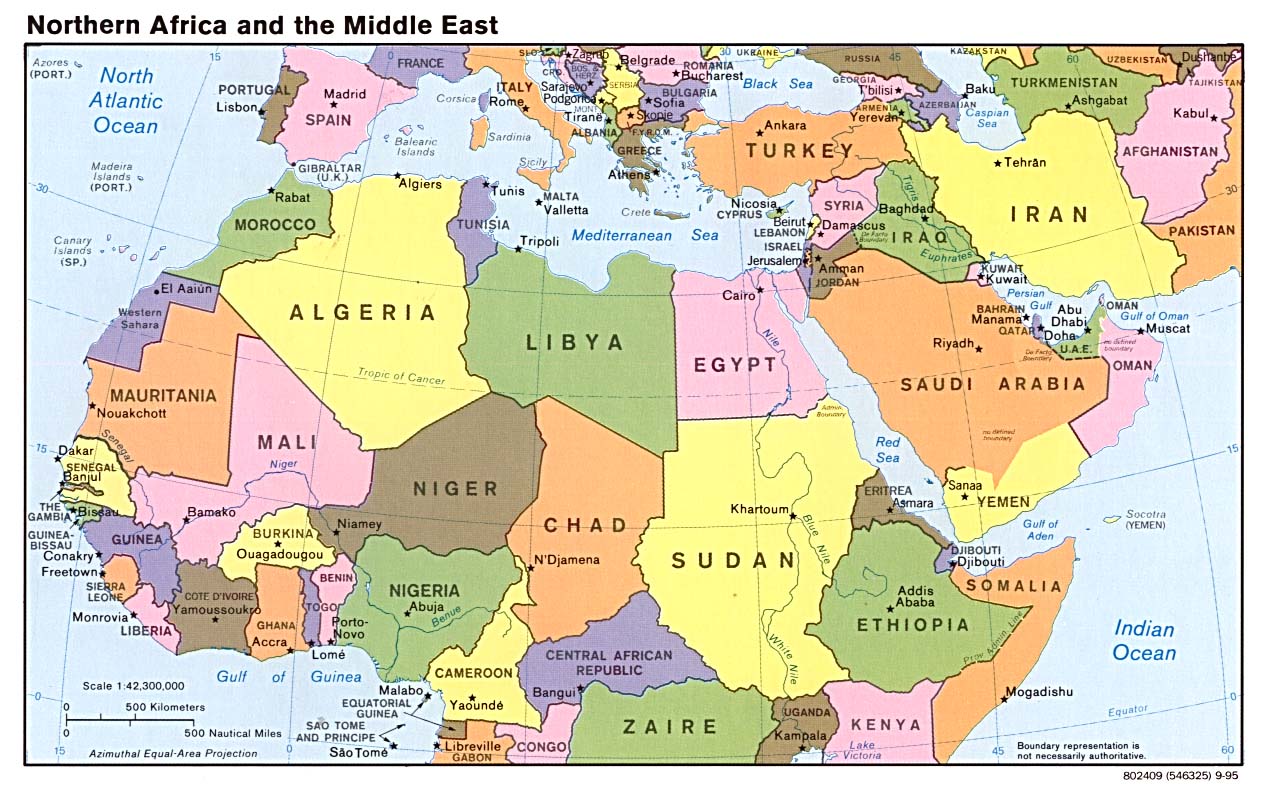
Finally, I found a story about the aftermath of Liberia post-Charles Taylor, where the UN is having problems with the disarmament program. However, it's the good kind of problem, as it seems that the program is so popular they are having trouble keeping up with the number of people turning in weapons. However, it's a problem they'll have to fix quickly if they want to successfully restore order to this region of western Africa.
Well, the weather outside here in Halifax is certainly frightful -- we've had about three inches of snow overnight that's just now changing to rain, making for fun times on the road. However, it gives me some time to catch up on some reading I've been meaning to do, especially a poetry anthology that I've been trying to get through. I know very little about poetry, so I was hoping that this might give me a broad overview so that I don't have to be completely ignorant. Also, I came across a few stories that I thought were interesting. The first one deals with how oak barrels apparently improve the anti-cancer potential of red wine. Given that I rarely turn down a good bottle of wine, I can further justify my interest by claiming this on top of all the other studies that show red wine to be a benefit to your health.
Also of interest, and relating to a story that I previously wrote about, it looks like the United States has an agreement with the Yugoslavian tribunal to edit the testimony of Wesley Clark in the interests of national security. I find this interesting because you would think that given his long career in the military, General Clark would have enough sense about him not to reveal military secrets or other confidential information to the court. I think that this is a little bit of an overreaction and, as we can see from this article, a bad PR move for the United States.
Finally, I found a story about the aftermath of Liberia post-Charles Taylor, where the UN is having problems with the disarmament program. However, it's the good kind of problem, as it seems that the program is so popular they are having trouble keeping up with the number of people turning in weapons. However, it's a problem they'll have to fix quickly if they want to successfully restore order to this region of western Africa.
General Ramblings
Well, it seems that there's been a lot of hits on my website and all in the last little while, so I decided to break from my vacation and write and entry so that people will have something to read. :)
I don't know even where to begin, since there umpteen different things going on, but I think the best way to do it might be to use a handy-dandy list:
1) The Capture of Saddam Hussein -- I'm not going to get into this since I don't think there's anything new to be said after the media frenzy. I did what to reiterate a couple of points though. First is that this is great news for Bush's reelection campaign. Now that they have him though, the only problem now is how to go about trying him for crimes against humanity. I personally think using Iraqi courts are the wrong way to go, since there will be many questions as to whether he will be able to receive a fair trial. My next thought was the ICC, but the United States is not a signatory to the Rome Statute and I'm pretty sure that there is an internal limitation to the treaty specifying that the crimes must occur after the ratification of the treaty. That might leave a special tribunal like the one they have for Yugoslavia, but I'm honestly not really up on the mechanics of the process.
2) Paul Martin -- Well, I've heard everything from the modern saviour of the Liberal Party to the cause of its demise, but not much in between. It should be interesting to see how the new cabinet works out, although it's really just a temporary fix until the election in spring 2004. I'm not saying anything yet.
3) Assassination attempt on Musharraf -- Perhaps a little underreported given the other things that have been going on, but it shows how close we are to having a possible anarchy on our hands in Pakistan. If having a country with nuclear weapons fall into anarchy is bad, having a neighbour with both nuclear weapons and a shaky relationship is even worse. I'm sure there must be a backup plan for the world community if something like this is ever successful - I just hope it's better than the post-war plan in Iraq.
4) Wesley Clark to give testimony -- This isn't a major news story, but I thought it was an interesting tidbit that might be overlooked. Poor Wesley Clark - he had so much going for him when he started out and it was almost completely squandered. Hopefully he'll learn his lessons in time to receive the VP nomination.
5) Saw Evanescence on Much Music today -- she's got a great voice, but mysteriously doesn't look like she does in the music videos. She's far from being unattractive, but it looks like her face and arms gained about fifteen pounds. I also assumed she was around 30 from the videos but in the interview she looked much younger. I watched an hour of her answering questions and I still have no idea what her deal is. OK music though.
Well, it seems that there's been a lot of hits on my website and all in the last little while, so I decided to break from my vacation and write and entry so that people will have something to read. :)
I don't know even where to begin, since there umpteen different things going on, but I think the best way to do it might be to use a handy-dandy list:
1) The Capture of Saddam Hussein -- I'm not going to get into this since I don't think there's anything new to be said after the media frenzy. I did what to reiterate a couple of points though. First is that this is great news for Bush's reelection campaign. Now that they have him though, the only problem now is how to go about trying him for crimes against humanity. I personally think using Iraqi courts are the wrong way to go, since there will be many questions as to whether he will be able to receive a fair trial. My next thought was the ICC, but the United States is not a signatory to the Rome Statute and I'm pretty sure that there is an internal limitation to the treaty specifying that the crimes must occur after the ratification of the treaty. That might leave a special tribunal like the one they have for Yugoslavia, but I'm honestly not really up on the mechanics of the process.
2) Paul Martin -- Well, I've heard everything from the modern saviour of the Liberal Party to the cause of its demise, but not much in between. It should be interesting to see how the new cabinet works out, although it's really just a temporary fix until the election in spring 2004. I'm not saying anything yet.
3) Assassination attempt on Musharraf -- Perhaps a little underreported given the other things that have been going on, but it shows how close we are to having a possible anarchy on our hands in Pakistan. If having a country with nuclear weapons fall into anarchy is bad, having a neighbour with both nuclear weapons and a shaky relationship is even worse. I'm sure there must be a backup plan for the world community if something like this is ever successful - I just hope it's better than the post-war plan in Iraq.
4) Wesley Clark to give testimony -- This isn't a major news story, but I thought it was an interesting tidbit that might be overlooked. Poor Wesley Clark - he had so much going for him when he started out and it was almost completely squandered. Hopefully he'll learn his lessons in time to receive the VP nomination.
5) Saw Evanescence on Much Music today -- she's got a great voice, but mysteriously doesn't look like she does in the music videos. She's far from being unattractive, but it looks like her face and arms gained about fifteen pounds. I also assumed she was around 30 from the videos but in the interview she looked much younger. I watched an hour of her answering questions and I still have no idea what her deal is. OK music though.
Friday, December 05, 2003
Canadianisms
Since being in the United States for three years, I've noticed that there are several words or products don't exist here, which often causes some confusion when I use them in conversation. I addressed this issue briefly in the Living in the Empire section of my webpage, but I found today and handy-dandy list of Canadianisms while surfing around. I also found an alternate list here. I thought I'd share them.
Since being in the United States for three years, I've noticed that there are several words or products don't exist here, which often causes some confusion when I use them in conversation. I addressed this issue briefly in the Living in the Empire section of my webpage, but I found today and handy-dandy list of Canadianisms while surfing around. I also found an alternate list here. I thought I'd share them.
There goes the planet...
We all by now know about the 'excellent' job the Bush administration is doing when it comes to environmental policy. Well, their strategies just got even 'better.' According to Grist Magazine, US Officials have arrived at the United Nations Kyoto Protocol conference, and they're not taking to all this mamby-pamby, 'save-the-world' rhetoric sitting down. It seems that merely refusing to sign the Kyoto agreement isn't enough -- they now have to stall the negotiations to ensure that the countries actually interested in preventing global warming don't sign it themselves.
Now, I've written extensively concerning this administration' seemingly oblivious attitude toward international negotiation. It just surprises me that they continue down this road, then wonder why they 'don't get no respect.'
We all by now know about the 'excellent' job the Bush administration is doing when it comes to environmental policy. Well, their strategies just got even 'better.' According to Grist Magazine, US Officials have arrived at the United Nations Kyoto Protocol conference, and they're not taking to all this mamby-pamby, 'save-the-world' rhetoric sitting down. It seems that merely refusing to sign the Kyoto agreement isn't enough -- they now have to stall the negotiations to ensure that the countries actually interested in preventing global warming don't sign it themselves.
Now, I've written extensively concerning this administration' seemingly oblivious attitude toward international negotiation. It just surprises me that they continue down this road, then wonder why they 'don't get no respect.'
Thursday, December 04, 2003
At the Meetup
Well, I just got back from another Dean Meetup, and after missing the past few because of my actuarial exams I'm starting to wish that I was less dedicated. I met several new people there that I had some pretty good conversations with. Like any political event, you have both the really cool people and the crazy people at the same time, but luckily this one was weighted to the former and not the latter. Had a good discussion with a guy about the CSO (in addition to all the political discussions, of course) for instance. Also met a girl who was just about to be shipped off to Wisconsin with the campaign. She works in Evanston providing social services and briefly talked about living France. It seems to be that in the last three years I've forgotten that most of my good friends back home were people that I met while working in politics. This sort of thing reminds me of why that's the case.
I also got the opportunity to handwrite two letters to potential voters in Iowa about why they should support Governor Dean, which I thought was an interesting exercise in democratic discourse. All-in-all, I'm pretty psyched about the whole thing again -- it's too bad that I'm leaving in a couple of days to go back home, although I should be back just in time for the January meeting.
Well, I just got back from another Dean Meetup, and after missing the past few because of my actuarial exams I'm starting to wish that I was less dedicated. I met several new people there that I had some pretty good conversations with. Like any political event, you have both the really cool people and the crazy people at the same time, but luckily this one was weighted to the former and not the latter. Had a good discussion with a guy about the CSO (in addition to all the political discussions, of course) for instance. Also met a girl who was just about to be shipped off to Wisconsin with the campaign. She works in Evanston providing social services and briefly talked about living France. It seems to be that in the last three years I've forgotten that most of my good friends back home were people that I met while working in politics. This sort of thing reminds me of why that's the case.
I also got the opportunity to handwrite two letters to potential voters in Iowa about why they should support Governor Dean, which I thought was an interesting exercise in democratic discourse. All-in-all, I'm pretty psyched about the whole thing again -- it's too bad that I'm leaving in a couple of days to go back home, although I should be back just in time for the January meeting.
Wednesday, December 03, 2003
The Neo-Futurists
I'm in the middle of a PL/1 training which is going a little bit slow (we're on if/select statements) so I thought, "What a great time to update the blog!" Since I've been talking a lot of politics lately I thought I'd change it up for a bit, so I'm going to briefly talk about a theatre company that I saw last week called the Neo-Futurists. They were playing at the Metropolis Theatre in Arlington Heights, but usually they perform their material in their own space in the city. The play they performed was called "Too Much Light Makes the Baby Go Blind," which consisted of 30 independent plays in 60 minutes. This unto itself is pretty impressive, but what really got me is that every week they get rid of a certain number of plays and write new ones, so if you go see the play a couple of months apart you could potentially see two completely different shows.
Overall the performance was worth seeing though -- though perhaps not deep or particularly thought provoking, it was at the very least quite clever. They placed a timer at the front of the stage set for an hour and had a clothesline full of numbered pieces of paper from 1 to 30. The audience would shout out a number, which they grabbed from the clothesline and read the title off of the back. They would then get set up for the play, read the title once more, then begin. Some of the more entertaining ones involved an orange that forgot its lines, two lovers 'in the time of cholera,' Turkey-Man, one called 'If a Play Happens in the Lobby and No One is There to See It, Is It Still Art?', 'Slow Fade to Black,' and 'This Weird Thing Between Us.' Like I said at the top, they play in the city all the time in their own space, where I believe the cost of admission is $5 plus the role of one six-sided die. It's worth seeing.
I'm in the middle of a PL/1 training which is going a little bit slow (we're on if/select statements) so I thought, "What a great time to update the blog!" Since I've been talking a lot of politics lately I thought I'd change it up for a bit, so I'm going to briefly talk about a theatre company that I saw last week called the Neo-Futurists. They were playing at the Metropolis Theatre in Arlington Heights, but usually they perform their material in their own space in the city. The play they performed was called "Too Much Light Makes the Baby Go Blind," which consisted of 30 independent plays in 60 minutes. This unto itself is pretty impressive, but what really got me is that every week they get rid of a certain number of plays and write new ones, so if you go see the play a couple of months apart you could potentially see two completely different shows.
Overall the performance was worth seeing though -- though perhaps not deep or particularly thought provoking, it was at the very least quite clever. They placed a timer at the front of the stage set for an hour and had a clothesline full of numbered pieces of paper from 1 to 30. The audience would shout out a number, which they grabbed from the clothesline and read the title off of the back. They would then get set up for the play, read the title once more, then begin. Some of the more entertaining ones involved an orange that forgot its lines, two lovers 'in the time of cholera,' Turkey-Man, one called 'If a Play Happens in the Lobby and No One is There to See It, Is It Still Art?', 'Slow Fade to Black,' and 'This Weird Thing Between Us.' Like I said at the top, they play in the city all the time in their own space, where I believe the cost of admission is $5 plus the role of one six-sided die. It's worth seeing.
Political messages that work, and those that don't
Got this one today complements of a piece I read in Salon the other day. The article was about the success of Moveon.org, a political site that among other things has been raising piles of money for Democrats lately, but what caught my attention were two quotes, one attributed to Howard Dean's campaign and one to John Kerry's. I thought I'd present them as testaments to good and bad political messages. They are similar in that they both respond to Bush's first campaign ad that attacks the Democrats over their opposition to Iraq. First, the one that doesn't work:
John Kerry ran a similar response, with a commercial that makes use of footage of Bush in a flight suit. "George Bush's ad says he's being attacked for attacking the terrorists," says the spot's narrator. "No, Mr. President, America's united against terror. The problem is, you declared, 'Mission accomplished,' but had no plan to win the peace and handed out billions of contracts to contributors like Halliburton."
Why doesn't this work? For two reasons: first because the message is muddled by trying to force two ideas together that don't naturally fit together, that is 1) Bush had no plan after the war was over and, 2) He gave billions of dollars to Halliburton, of which Cheney was a director before becoming VP. The second reason is that I don't think either of the messages will really resonate with people. The idea that Bush had no plan might strike people as factually true, but it doesn't really speak to the big question of what we should do about it now. The idea that Bush is funding Cheney's old firm with government money is not even directly stated, and even if it was, I don't think that it would move people to action that aren't already going to vote against Bush. I think the reason for this is because, in the big scheme of things, ensuring another 9/11 doesn't happen is much more important to people than whether or not some company got a little extra coin through knowing people. I think you could even say that it's even expected to a certain degree by people.
Now for the one that I thought worked. Once again, in response to the same ad:
It mimics the Bush spot, showing the president giving the State of the Union address. This time, though, a narrator says, "He misled the nation about weapons of mass destruction." Then the scene changes to Dean on the campaign trail, and the ad says, "Howard Dean is committed to fighting terrorism and protecting our national security. But Howard Dean opposed the war in Iraq from the beginning. He believes it's time we had a foreign policy consistent with American values. And it's time to restore the dignity and respect our country deserves around the world."
I have to say first that the message here isn't awesome, but there are a couple of things I do like about it, unlike the first one. First, it brings up a point that is much more important than whether or not Halliburton made some extra coin off of the war, that is, the president intentionally misled the nation into believing there was a threat from Iraq, thereby costing America billions of dollars and hundreds of lives fighting a war that, in its heart, was an act of deception. But what I really like about the ad is the last two lines. I've spoken to several people down here, some of whom are quite centrist, and there is a prevailing attitude that regardless of whether the war was a good or bad thing this administration caused America to make decisions that adversely effect the image of the country, and international arrogance is not what they want this country to be about. Now, I'm sure that Brad is going to read this at some point and I'll get a phone call from him disagreeing with me because of foreign policy goal x, but the real point of the matter is that I think there are people out there who are ready to hear this message. Furthermore, I think this message could lead to a positive movement against the recent neo-conservative tilt in foreign policy, which would be something that could only improve the overall global situation.
The fact that I liked the Howard Dean one shouldn't be taken as a blind act of allegiance, although it is because he conveys messages like this that I supported him in the first place. It only shows, perhaps unfortunately, how sunk Kerry's campaign is right now at a time when they desperately need something to pull them out of the oblivion they seem to be heading for.
Got this one today complements of a piece I read in Salon the other day. The article was about the success of Moveon.org, a political site that among other things has been raising piles of money for Democrats lately, but what caught my attention were two quotes, one attributed to Howard Dean's campaign and one to John Kerry's. I thought I'd present them as testaments to good and bad political messages. They are similar in that they both respond to Bush's first campaign ad that attacks the Democrats over their opposition to Iraq. First, the one that doesn't work:
John Kerry ran a similar response, with a commercial that makes use of footage of Bush in a flight suit. "George Bush's ad says he's being attacked for attacking the terrorists," says the spot's narrator. "No, Mr. President, America's united against terror. The problem is, you declared, 'Mission accomplished,' but had no plan to win the peace and handed out billions of contracts to contributors like Halliburton."
Why doesn't this work? For two reasons: first because the message is muddled by trying to force two ideas together that don't naturally fit together, that is 1) Bush had no plan after the war was over and, 2) He gave billions of dollars to Halliburton, of which Cheney was a director before becoming VP. The second reason is that I don't think either of the messages will really resonate with people. The idea that Bush had no plan might strike people as factually true, but it doesn't really speak to the big question of what we should do about it now. The idea that Bush is funding Cheney's old firm with government money is not even directly stated, and even if it was, I don't think that it would move people to action that aren't already going to vote against Bush. I think the reason for this is because, in the big scheme of things, ensuring another 9/11 doesn't happen is much more important to people than whether or not some company got a little extra coin through knowing people. I think you could even say that it's even expected to a certain degree by people.
Now for the one that I thought worked. Once again, in response to the same ad:
It mimics the Bush spot, showing the president giving the State of the Union address. This time, though, a narrator says, "He misled the nation about weapons of mass destruction." Then the scene changes to Dean on the campaign trail, and the ad says, "Howard Dean is committed to fighting terrorism and protecting our national security. But Howard Dean opposed the war in Iraq from the beginning. He believes it's time we had a foreign policy consistent with American values. And it's time to restore the dignity and respect our country deserves around the world."
I have to say first that the message here isn't awesome, but there are a couple of things I do like about it, unlike the first one. First, it brings up a point that is much more important than whether or not Halliburton made some extra coin off of the war, that is, the president intentionally misled the nation into believing there was a threat from Iraq, thereby costing America billions of dollars and hundreds of lives fighting a war that, in its heart, was an act of deception. But what I really like about the ad is the last two lines. I've spoken to several people down here, some of whom are quite centrist, and there is a prevailing attitude that regardless of whether the war was a good or bad thing this administration caused America to make decisions that adversely effect the image of the country, and international arrogance is not what they want this country to be about. Now, I'm sure that Brad is going to read this at some point and I'll get a phone call from him disagreeing with me because of foreign policy goal x, but the real point of the matter is that I think there are people out there who are ready to hear this message. Furthermore, I think this message could lead to a positive movement against the recent neo-conservative tilt in foreign policy, which would be something that could only improve the overall global situation.
The fact that I liked the Howard Dean one shouldn't be taken as a blind act of allegiance, although it is because he conveys messages like this that I supported him in the first place. It only shows, perhaps unfortunately, how sunk Kerry's campaign is right now at a time when they desperately need something to pull them out of the oblivion they seem to be heading for.
Wednesday, November 19, 2003
Is Rational Thought Being Taught About Schools?
There are some stories that just make you wonder what people are thinking. In this Sunday's Tribune for instance, there was an article titled "Even teachers debate course of social studies." This article discussed how some social studies teachers were opposed to teaching high school students about current events in a way that might put the United States in a bad light. Now, even suggesting something like this seems somewhat odd to me, but there are many things in American culture that I find somewhat odd and usually I let it go. Unfortunately, this is one I couldn't let go -- here's the part that got me, and I quote:
" ..an outspoken group of social studies teachers around the country say such classroom scenes breed cynical, anti-American attitudes. High school students, they argue, simply are not mature enough to engage in critical thinking."
Simply not mature enough to engage in critical thinking. Hmmmm. Interesting. I don't know about you, but I was all about critical thinking (by which I assume is synonymous with 'questioning society') in high school, and I think it would have been better if there was more of it among my peers -- especially since they were only a few years away from being able to vote. I wonder if these 'outspoken group of social studies teachers' think that you mystically gain critical thinking abilities at 18. But then again, there's a different mindset at work here: one that says that it's clearly not useful to democracy that students be taught to think critically. Much better for them to just act all sheep-like, right?
Unfortunately, it didn't stop there:
"Conservative social studies teachers were pushed 'over the edge' by the council's cautious response to Sept. 11 -- including pleas for tolerance on behalf of Arab-Americans and others."
Cause you know, you wouldn't want tolerance. Better to hunt them down and string them up while the passions are high. When was the last time you were at a good lynching? Gotta miss those days.
So are you wondering what exactly conservative teachers think should be taught? Here's a quote:
"The conservatives say a citizen focuses on the positive aspects of American history and tends to minimize the negatives in light of the bigger picture. As [James] Lemming said: 'Kids need a clear, attractive image of our country. A lot of kids coming out of a unit on slavery will say, 'Wow, that was really bad'' He said they should instead frame their thoughts on the incredible achievements of the Constitution and how the United States was the first nation to abolish slavery."
Before I begin I have to point out one thing. The United States abolished slavery in 1865 following the Civil War. But that event was preceded by the British colonies in 1834, France in 1848 and even Cuba in 1860. One would hope that regardless of whether you think what is being taught is positive or negative, at the very least it would be factually correct.
Now, it's clear that there are many 'good' things that happened in the course of American history. But to minimize the bad things only creates a culture ignorant to its own failings, which in the long run could be much more damaging since, as Santayana so famously put it, 'those who cannot remember the past are condemned to repeat it.' It would be far better for the citizenry of a country to be fully aware of and understand their historical mistakes as a representation of the continuous progress or society, both historically and presently.
There are some stories that just make you wonder what people are thinking. In this Sunday's Tribune for instance, there was an article titled "Even teachers debate course of social studies." This article discussed how some social studies teachers were opposed to teaching high school students about current events in a way that might put the United States in a bad light. Now, even suggesting something like this seems somewhat odd to me, but there are many things in American culture that I find somewhat odd and usually I let it go. Unfortunately, this is one I couldn't let go -- here's the part that got me, and I quote:
" ..an outspoken group of social studies teachers around the country say such classroom scenes breed cynical, anti-American attitudes. High school students, they argue, simply are not mature enough to engage in critical thinking."
Simply not mature enough to engage in critical thinking. Hmmmm. Interesting. I don't know about you, but I was all about critical thinking (by which I assume is synonymous with 'questioning society') in high school, and I think it would have been better if there was more of it among my peers -- especially since they were only a few years away from being able to vote. I wonder if these 'outspoken group of social studies teachers' think that you mystically gain critical thinking abilities at 18. But then again, there's a different mindset at work here: one that says that it's clearly not useful to democracy that students be taught to think critically. Much better for them to just act all sheep-like, right?
Unfortunately, it didn't stop there:
"Conservative social studies teachers were pushed 'over the edge' by the council's cautious response to Sept. 11 -- including pleas for tolerance on behalf of Arab-Americans and others."
Cause you know, you wouldn't want tolerance. Better to hunt them down and string them up while the passions are high. When was the last time you were at a good lynching? Gotta miss those days.
So are you wondering what exactly conservative teachers think should be taught? Here's a quote:
"The conservatives say a citizen focuses on the positive aspects of American history and tends to minimize the negatives in light of the bigger picture. As [James] Lemming said: 'Kids need a clear, attractive image of our country. A lot of kids coming out of a unit on slavery will say, 'Wow, that was really bad'' He said they should instead frame their thoughts on the incredible achievements of the Constitution and how the United States was the first nation to abolish slavery."
Before I begin I have to point out one thing. The United States abolished slavery in 1865 following the Civil War. But that event was preceded by the British colonies in 1834, France in 1848 and even Cuba in 1860. One would hope that regardless of whether you think what is being taught is positive or negative, at the very least it would be factually correct.
Now, it's clear that there are many 'good' things that happened in the course of American history. But to minimize the bad things only creates a culture ignorant to its own failings, which in the long run could be much more damaging since, as Santayana so famously put it, 'those who cannot remember the past are condemned to repeat it.' It would be far better for the citizenry of a country to be fully aware of and understand their historical mistakes as a representation of the continuous progress or society, both historically and presently.
Friday, October 24, 2003
Bill Clinton: Secretary-General?
Not that this is a new idea, but how cool would it be for Bill Clinton to become the Secretary-General of the United Nations after Kofi Annan steps down? Interestingly enough, there has never been a Secretary-General from North America, so in a way he'd even be breaking some ground. I only bring this up because of the recent story (which I heard on The World tonight) where Bill Clinton brokered a deal to lower the cost of the AIDS cocktail of drugs in the developing countries from its current price of about $1.50 a day per patient to less than 40 cents a day. Needless to say, this is a huge improvement and a vital change for aid agencies and poor countries that desperately need affordable drugs for their populations. It also boosts the already quite positive international profile of Clinton only a few years before Kofi is due for retirement in 2006. It should be interesting to see how it all pans out in the next two years.
Not that this is a new idea, but how cool would it be for Bill Clinton to become the Secretary-General of the United Nations after Kofi Annan steps down? Interestingly enough, there has never been a Secretary-General from North America, so in a way he'd even be breaking some ground. I only bring this up because of the recent story (which I heard on The World tonight) where Bill Clinton brokered a deal to lower the cost of the AIDS cocktail of drugs in the developing countries from its current price of about $1.50 a day per patient to less than 40 cents a day. Needless to say, this is a huge improvement and a vital change for aid agencies and poor countries that desperately need affordable drugs for their populations. It also boosts the already quite positive international profile of Clinton only a few years before Kofi is due for retirement in 2006. It should be interesting to see how it all pans out in the next two years.
Tuesday, October 21, 2003
Who ever said irony was dead?
Wondering if Kazaa Lite has a new version out? It's going to be somewhat more difficult to find out, especially if you didn't bookmark the page. If you do a quick Google search of Kazaa Lite, you'll see lots of pages that probably were closer to the bottom before. If you scroll down to the bottom though, you'll see the following notice:
In response to a complaint we received under the Digital Millennium Copyright Act, we have removed 7 result(s) from this page. If you wish, you may read the DMCA complaint for these removed results.
Kazaa Media Desktop had decided to file a complaint against Google for linking to sites that infringe their copyright, and this would include Kazaa Lite. I could go into epic proportions about how this is an expansion of the DMCA and what the long term ramifications of this action are, but instead I just wanted to point something out that struck me as somewhat odd: Kazaa is claiming copyright infringement on a product that is used almost solely to infringe copyright.
Like I said, you could probably have a long discussion over the legal and social meaning to all of this, and I'd refer you to places where that conversation is taking place if you're interested. As a final note of irony on my part though -- perhaps the icing to the cake: by linking to the DMCA complaint, Google effectively gives everyone a list of all the sites that it removed from its search page, so you can still find the sites you want, albeit in a slightly roundabout way. Thus the whole exercise of filing the complaint is almost pointless given that anyone can still retrieve the information that they were initially looking for.
I wonder how long it will take for Kazaa to file a complaint about the complaint?
Wondering if Kazaa Lite has a new version out? It's going to be somewhat more difficult to find out, especially if you didn't bookmark the page. If you do a quick Google search of Kazaa Lite, you'll see lots of pages that probably were closer to the bottom before. If you scroll down to the bottom though, you'll see the following notice:
In response to a complaint we received under the Digital Millennium Copyright Act, we have removed 7 result(s) from this page. If you wish, you may read the DMCA complaint for these removed results.
Kazaa Media Desktop had decided to file a complaint against Google for linking to sites that infringe their copyright, and this would include Kazaa Lite. I could go into epic proportions about how this is an expansion of the DMCA and what the long term ramifications of this action are, but instead I just wanted to point something out that struck me as somewhat odd: Kazaa is claiming copyright infringement on a product that is used almost solely to infringe copyright.
Like I said, you could probably have a long discussion over the legal and social meaning to all of this, and I'd refer you to places where that conversation is taking place if you're interested. As a final note of irony on my part though -- perhaps the icing to the cake: by linking to the DMCA complaint, Google effectively gives everyone a list of all the sites that it removed from its search page, so you can still find the sites you want, albeit in a slightly roundabout way. Thus the whole exercise of filing the complaint is almost pointless given that anyone can still retrieve the information that they were initially looking for.
I wonder how long it will take for Kazaa to file a complaint about the complaint?
Tuesday, October 14, 2003
The Religious Right
I'll admit it. If there's one thing I don't understand about America, it's how the religious right, people whom in Canada would seem next to crazy (and that's being charitable, except perhaps in Alberta where it's conservative enough to make them look mainstream), has as much power and influence as they do. The practicing of religion where I come from is, for the most part, a pretty low-key affair, with people doing their weekly thing on the weekend and, well, that's about it. Here, it's more of a full time institution -- you go to church, go to your prayer group, attend pro-life rallies, listen to Christian music -- you could literally spend all of you time doing churchy stuff, and the thing that blows my mind the most is the number of people whom I’ve met that do.
Now, as a fairly secular and liberal Catholic (seemly one of a minority down here, by the way), I find all of this vaguely creepy. I meet people who apparently 'have the fire burning' within them, and I wonder at what point, if at all, they do the whole St. Thomas thing and periodically have a big retrospective on what's going on with their faith. After all, spirituality is a dynamic thing, and for every crest there has to be a trough. It's the apparent absence of these that makes me wonder to what degree there is self-reflection vs. blind faith.
It's this apparent blind faith in evangelical Christianity that scares the crap out of me. I come from a relativistic view where faith and reason go hand in hand, and thus view with great suspicion those who profess an absolutist doctrine. As I've been down here for a number of years now, I've sort of lumped most evangelical Christians into this category, and credited them with the continuing political success of the GOP, who reflects this type of 'black vs. white' thinking far more than the Democrats.
The problem is though, as evidenced in the recent Slate article "Debunking myths about the religious right," is that you can't really place all evangelical Christians in the 'scary' category, that there needs to be a delineation between them and those and 'fundamentalist' Christians (who are still very scary). I won't go into recreating the article, but you should check it out. It certainly made me pause and consider how I was thinking of the problem of political Christianity in America. I briefly borrowed a book from the library called The Transformation of American Religion: How We Actually Live Our Faith in an attempt to delve more into the sacredization (I assume if secularization is a word, this is too) of American society. Unfortunately I had to return it before I could get much into it, but it's on the short list of things to read in the next little while.
I'll admit it. If there's one thing I don't understand about America, it's how the religious right, people whom in Canada would seem next to crazy (and that's being charitable, except perhaps in Alberta where it's conservative enough to make them look mainstream), has as much power and influence as they do. The practicing of religion where I come from is, for the most part, a pretty low-key affair, with people doing their weekly thing on the weekend and, well, that's about it. Here, it's more of a full time institution -- you go to church, go to your prayer group, attend pro-life rallies, listen to Christian music -- you could literally spend all of you time doing churchy stuff, and the thing that blows my mind the most is the number of people whom I’ve met that do.
Now, as a fairly secular and liberal Catholic (seemly one of a minority down here, by the way), I find all of this vaguely creepy. I meet people who apparently 'have the fire burning' within them, and I wonder at what point, if at all, they do the whole St. Thomas thing and periodically have a big retrospective on what's going on with their faith. After all, spirituality is a dynamic thing, and for every crest there has to be a trough. It's the apparent absence of these that makes me wonder to what degree there is self-reflection vs. blind faith.
It's this apparent blind faith in evangelical Christianity that scares the crap out of me. I come from a relativistic view where faith and reason go hand in hand, and thus view with great suspicion those who profess an absolutist doctrine. As I've been down here for a number of years now, I've sort of lumped most evangelical Christians into this category, and credited them with the continuing political success of the GOP, who reflects this type of 'black vs. white' thinking far more than the Democrats.
The problem is though, as evidenced in the recent Slate article "Debunking myths about the religious right," is that you can't really place all evangelical Christians in the 'scary' category, that there needs to be a delineation between them and those and 'fundamentalist' Christians (who are still very scary). I won't go into recreating the article, but you should check it out. It certainly made me pause and consider how I was thinking of the problem of political Christianity in America. I briefly borrowed a book from the library called The Transformation of American Religion: How We Actually Live Our Faith in an attempt to delve more into the sacredization (I assume if secularization is a word, this is too) of American society. Unfortunately I had to return it before I could get much into it, but it's on the short list of things to read in the next little while.
Sunday, October 12, 2003
Linda McQuaig
I was reading an article of hers published in the Toronto Star titled Dumbing down U.S. politics, in which she writes about the whole 'style of substance' revolution going on in American politics. As probably the best left-wing writer in Canada, her greatest strength is to avoid all the usual lefty rhetoric, instead writing in a straightforward method that shows the genuine problems of the situation that (at least I think) crosses political boundries.
As a long time fan of Ms. McQuaig's work, I forgot how great her articles are, so I wanted to share this one, and hope that you decide to check out more every week.
I was reading an article of hers published in the Toronto Star titled Dumbing down U.S. politics, in which she writes about the whole 'style of substance' revolution going on in American politics. As probably the best left-wing writer in Canada, her greatest strength is to avoid all the usual lefty rhetoric, instead writing in a straightforward method that shows the genuine problems of the situation that (at least I think) crosses political boundries.
As a long time fan of Ms. McQuaig's work, I forgot how great her articles are, so I wanted to share this one, and hope that you decide to check out more every week.
Friday, October 10, 2003
Why John Walters needs to get a life.
John Walters, in case you didn't know (and you probably didn't), is America's 'Drug Czar.' I didn't happen to know who he was, which just might say something about the relevance of his position.
He was in the news today rallying against Jean Chrétien’s comment about perhaps trying marijuana after he retires. According to him Canadians are 'ashamed' of the Prime Minister, and that Canada is the 'one place in the hemisphere where things are going the wrong [way] rapidly.'
All I have to say to John Walters is this: Blow Us. Collectively if possible.
If there's one thing that gets under my skin about American 'values' is their holier-than-thou approach to drug policy. I'm unsure how a country where 55% of the federal inmate population is in jail for breaking drug laws, including 37,000 for marijuana alone, can have anything legitimate to say about other country's drug policies. Wrap this up into the general fact that America imprisons a higher percentage of its citizens than any other nation in the world except for Russia, and you have to wonder whether they're really doing things right.
After all, prison is one of the most expensive and least effective parts of the social security net (A great line from Howard Dean, by the way). Throwing drug users in jail is more likely to increase their rate of criminality when they're released instead of rehabilitating them. Where Canada has it right (at least in my opinion) is that punishing soft-drug users with criminal records and/or jail time isn't going to help the situation. Ensure that there is a punishment, in this case a fine, to ensure that demand is reduced from normal levels, but keep jail time and criminal records for those people who are of actual harm to the society.
Unfortunately, this is another case of America trying to throw its weight around on the international scene like a child taking a temper tantrum when things aren't going his way. It wouldn't be so bad if they could come up with studying showing that medicinal use of marijuana is ineffective, than marijuana is a 'gateway' drug that leads to harder drug use, or that it increases the level of other criminal activity. But they can't, so we're only left with the repeating mantra of 'Drugs are bad... drugs are bad...,' which needless to say doesn't hold up well to rigorous debate.
In the end, if the US wants to be respected by other countries, it must learn that we’re not going to just capitulate to their political culture just because they want us to. Bring some real ideas to the table, and we might be able to talk. Otherwise, save it for someone else.
John Walters, in case you didn't know (and you probably didn't), is America's 'Drug Czar.' I didn't happen to know who he was, which just might say something about the relevance of his position.
He was in the news today rallying against Jean Chrétien’s comment about perhaps trying marijuana after he retires. According to him Canadians are 'ashamed' of the Prime Minister, and that Canada is the 'one place in the hemisphere where things are going the wrong [way] rapidly.'
All I have to say to John Walters is this: Blow Us. Collectively if possible.
If there's one thing that gets under my skin about American 'values' is their holier-than-thou approach to drug policy. I'm unsure how a country where 55% of the federal inmate population is in jail for breaking drug laws, including 37,000 for marijuana alone, can have anything legitimate to say about other country's drug policies. Wrap this up into the general fact that America imprisons a higher percentage of its citizens than any other nation in the world except for Russia, and you have to wonder whether they're really doing things right.
After all, prison is one of the most expensive and least effective parts of the social security net (A great line from Howard Dean, by the way). Throwing drug users in jail is more likely to increase their rate of criminality when they're released instead of rehabilitating them. Where Canada has it right (at least in my opinion) is that punishing soft-drug users with criminal records and/or jail time isn't going to help the situation. Ensure that there is a punishment, in this case a fine, to ensure that demand is reduced from normal levels, but keep jail time and criminal records for those people who are of actual harm to the society.
Unfortunately, this is another case of America trying to throw its weight around on the international scene like a child taking a temper tantrum when things aren't going his way. It wouldn't be so bad if they could come up with studying showing that medicinal use of marijuana is ineffective, than marijuana is a 'gateway' drug that leads to harder drug use, or that it increases the level of other criminal activity. But they can't, so we're only left with the repeating mantra of 'Drugs are bad... drugs are bad...,' which needless to say doesn't hold up well to rigorous debate.
In the end, if the US wants to be respected by other countries, it must learn that we’re not going to just capitulate to their political culture just because they want us to. Bring some real ideas to the table, and we might be able to talk. Otherwise, save it for someone else.
Wednesday, October 08, 2003
One down...
Amidst the larger stories going on, one being the California recall and the other being the Cubbies, Bob Graham ending his presidential bid seemed to get, well, somewhat lost.
Not that this wasn't typical for his campaign, nor is it very surprising that it happened at all. Although Bob Graham seemed to be a well-intentioned guy, he just didn't say anything that would lead some one not from Florida to vote for him above the other candidates. Everyone seemed to know this, so it was more of a matter of when rather than if. As it mentions in the story though, everyone also thought that he was mostly in it just to get some exposure for the Vice-Presidential nod. However, if Clark doesn't win the nomination, I would say that he is the better bet, even with Florida being the key state that it is.
In the end though, it will make the debates slightly better with fewer people sharing the same time. Unfortunately the marginal benefit is always the smallest with the first person, so it would be better if others make the same decision and let the people with a real chance at winning share more of the spotlight. In case you were wondering, that would be anyone other than Dean, Clark, Kerry and Edwards. Then we would have the time to see each of them perform at a higher level with more questions, all of which will be valuable experience for one of them when they eventually take on Bush.
Unfortunately it's unlikely that we're going to see this happen to a great degree soon, since both Liebermann and Kucinich are going to be around to represent the far left and far right, and one of either Sharpton or Moseley-Braun is likely to stick around. Dick Gephart, if he ever gets the union endorsements, will also be around, but I don't think his support is wide enough to pull through in the end. Hopefully though this will be the beginning of a trend so that the party can get down to the real business of figuring out who is the best candidate for the nomination.
Amidst the larger stories going on, one being the California recall and the other being the Cubbies, Bob Graham ending his presidential bid seemed to get, well, somewhat lost.
Not that this wasn't typical for his campaign, nor is it very surprising that it happened at all. Although Bob Graham seemed to be a well-intentioned guy, he just didn't say anything that would lead some one not from Florida to vote for him above the other candidates. Everyone seemed to know this, so it was more of a matter of when rather than if. As it mentions in the story though, everyone also thought that he was mostly in it just to get some exposure for the Vice-Presidential nod. However, if Clark doesn't win the nomination, I would say that he is the better bet, even with Florida being the key state that it is.
In the end though, it will make the debates slightly better with fewer people sharing the same time. Unfortunately the marginal benefit is always the smallest with the first person, so it would be better if others make the same decision and let the people with a real chance at winning share more of the spotlight. In case you were wondering, that would be anyone other than Dean, Clark, Kerry and Edwards. Then we would have the time to see each of them perform at a higher level with more questions, all of which will be valuable experience for one of them when they eventually take on Bush.
Unfortunately it's unlikely that we're going to see this happen to a great degree soon, since both Liebermann and Kucinich are going to be around to represent the far left and far right, and one of either Sharpton or Moseley-Braun is likely to stick around. Dick Gephart, if he ever gets the union endorsements, will also be around, but I don't think his support is wide enough to pull through in the end. Hopefully though this will be the beginning of a trend so that the party can get down to the real business of figuring out who is the best candidate for the nomination.
Monday, September 29, 2003
Wesley and Howard, up in a tree...
Salon had an article today about the 'civil-union' between Wesley Clark and Howard Dean. The article itself was OK, mostly about how the two front runners haven't really been attacking each other and the respect each one's activists have for the other, but it was really the cover picture that got me. :)
Salon had an article today about the 'civil-union' between Wesley Clark and Howard Dean. The article itself was OK, mostly about how the two front runners haven't really been attacking each other and the respect each one's activists have for the other, but it was really the cover picture that got me. :)

Three Movies
Saw three movies in the past couple of days, mostly in a desperate attempt to do anything other than study for my actuarial exam. I'm sure I'll find more creative uses of my time as the exam approaches, but for now this is what I came up with.
Thirteen
Good movie, probably an 8 or 9/10. Got into a discussion over a beer afterwards about what the role of the boys in the movie was. I argued that they were really secondary to the relationship between the two girls, but everyone else at the table (who just all happened to be female) disagreed, stating that the attention from boys was the prime mover of the movie. I'm still not convinced though -- there was just too much interaction between the girls where the guys weren’t even around, or just used as objects for sexual experimentation. The real emotional bond was between the girls and I think that's what drove the characters.
Had some great scenes, including one where the two girls first meet and there's a quick montage where they check each other out to see if they're wearing the appropriate clothes. The movie sold the relationship between the characters well to -- I found that despite the risqué and sometimes questionable nature of what most of them were doing, I still empathized with them and the crappy stuff that they had to go through, especially the mother who tried to walk the line between being 'cool' and being the protective mother.
The Quiet American
Probably the first movie I've seen where Brendan Fraser was OK. Playing opposite someone as talented as Michael Caine helps though. Overall I thought this was pretty good, although I think I'd have to give it a 7/10 because I felt that the story could have been better adapted to the screen. An interesting perspective of Vietnam during the late French colonial days when they were fighting the communists. Shows how American ideology (personified by Brendan Fraser) caused their eventual involvement. Isaac voted against this one because it didn’t have a ‘message,’ but I thought the story itself held up independently.
Solaris
Well, there had to be one movie I saw that wasn't all that good. I blame this one on Isaac, since he was the one who made the decision to rent it. A sci-fi flick starring George Clooney about a planet-star-thing that makes the dreams of people on an orbiting spacecraft come to reality, or more specifically, the person they dream about. Shot in a very minimalist style à la 2001, except here they couldn't pull it off. The result are piles of scenes where the action is slower than cold molasses, usually with George Clooney broodingly staring around. Opposing these scenes is the most strained dialogue I've possibly heard in a movie. It would have been better if this was shot as a parody, since at least then I could understand what they were trying to accomplish. Surprisingly, it good fairly good reviews from the critics, with the lead review in Rotten Tomatoes calling it a 'gorgeous and deceptively minimalist cinematic tone poem.' Maybe if you've smoked a gram or two beforehand.
Saw three movies in the past couple of days, mostly in a desperate attempt to do anything other than study for my actuarial exam. I'm sure I'll find more creative uses of my time as the exam approaches, but for now this is what I came up with.
Thirteen
Good movie, probably an 8 or 9/10. Got into a discussion over a beer afterwards about what the role of the boys in the movie was. I argued that they were really secondary to the relationship between the two girls, but everyone else at the table (who just all happened to be female) disagreed, stating that the attention from boys was the prime mover of the movie. I'm still not convinced though -- there was just too much interaction between the girls where the guys weren’t even around, or just used as objects for sexual experimentation. The real emotional bond was between the girls and I think that's what drove the characters.
Had some great scenes, including one where the two girls first meet and there's a quick montage where they check each other out to see if they're wearing the appropriate clothes. The movie sold the relationship between the characters well to -- I found that despite the risqué and sometimes questionable nature of what most of them were doing, I still empathized with them and the crappy stuff that they had to go through, especially the mother who tried to walk the line between being 'cool' and being the protective mother.
The Quiet American
Probably the first movie I've seen where Brendan Fraser was OK. Playing opposite someone as talented as Michael Caine helps though. Overall I thought this was pretty good, although I think I'd have to give it a 7/10 because I felt that the story could have been better adapted to the screen. An interesting perspective of Vietnam during the late French colonial days when they were fighting the communists. Shows how American ideology (personified by Brendan Fraser) caused their eventual involvement. Isaac voted against this one because it didn’t have a ‘message,’ but I thought the story itself held up independently.
Solaris
Well, there had to be one movie I saw that wasn't all that good. I blame this one on Isaac, since he was the one who made the decision to rent it. A sci-fi flick starring George Clooney about a planet-star-thing that makes the dreams of people on an orbiting spacecraft come to reality, or more specifically, the person they dream about. Shot in a very minimalist style à la 2001, except here they couldn't pull it off. The result are piles of scenes where the action is slower than cold molasses, usually with George Clooney broodingly staring around. Opposing these scenes is the most strained dialogue I've possibly heard in a movie. It would have been better if this was shot as a parody, since at least then I could understand what they were trying to accomplish. Surprisingly, it good fairly good reviews from the critics, with the lead review in Rotten Tomatoes calling it a 'gorgeous and deceptively minimalist cinematic tone poem.' Maybe if you've smoked a gram or two beforehand.
Thursday, September 25, 2003
The UN and Iraq
An article in the Christian Science Monitor today outlines what seems to be a resolution in the ongoing US/UN disagreement over Iraq. With Bush working with Germany and Russia again and things are looking good for having international troops in Iraq in next few months. I would argue, however, that the best strategy for the member nations of the UN who aren't the US or the 'coalition of the willing' would be to agree to a resolution, but hold off on any actually troop deployment for at least a half year, if not longer. This may seem like a strange strategy given the need to ensure the safety of the Iraqi people, but there is a larger fish to fry here, namely one from Crawfordsville Texas.
The longer that the United States remains the only power of influence in Iraq, the more money they will have to pour into the country to keep it stable and, and this is where the realpolitik part comes in, the more losses they will suffer to their armed forces. I have read in a couple of places that Americans don't mind casualties per say, but they don't like casualties while thinking that they aren't on the winning side of the strategy, i.e. that they are in a quagmire. The money spent, combined with a poor economy and the top-heavy tax cuts, will exacerbate the fiscal problems of the United States. This combined with ongoing casualties with no end in sight continue to sink GW's poll numbers so that in a year from now the Clark/Dean team rolls over him with promises for more international cooperation and fiscal sanity. Order that was taken away by this administrations unilateralism will then be restored to the international system and we can start making some real progress in dealing with the problems in Iraq and Afghanistan. (you do remember Afghanistan, don't you?)
I don't really like the idea of facilitating increased casualties for anyone, and it is true that there needs to be some semblance of order restored to Iraq for the sake of the people living there. But the larger problem for the global community is dealing with an administration that disrespects the international community with it's cowboy-like antics, and holding out a little before helping might be the optimum strategy to kill two birds with one stone.
An article in the Christian Science Monitor today outlines what seems to be a resolution in the ongoing US/UN disagreement over Iraq. With Bush working with Germany and Russia again and things are looking good for having international troops in Iraq in next few months. I would argue, however, that the best strategy for the member nations of the UN who aren't the US or the 'coalition of the willing' would be to agree to a resolution, but hold off on any actually troop deployment for at least a half year, if not longer. This may seem like a strange strategy given the need to ensure the safety of the Iraqi people, but there is a larger fish to fry here, namely one from Crawfordsville Texas.
The longer that the United States remains the only power of influence in Iraq, the more money they will have to pour into the country to keep it stable and, and this is where the realpolitik part comes in, the more losses they will suffer to their armed forces. I have read in a couple of places that Americans don't mind casualties per say, but they don't like casualties while thinking that they aren't on the winning side of the strategy, i.e. that they are in a quagmire. The money spent, combined with a poor economy and the top-heavy tax cuts, will exacerbate the fiscal problems of the United States. This combined with ongoing casualties with no end in sight continue to sink GW's poll numbers so that in a year from now the Clark/Dean team rolls over him with promises for more international cooperation and fiscal sanity. Order that was taken away by this administrations unilateralism will then be restored to the international system and we can start making some real progress in dealing with the problems in Iraq and Afghanistan. (you do remember Afghanistan, don't you?)
I don't really like the idea of facilitating increased casualties for anyone, and it is true that there needs to be some semblance of order restored to Iraq for the sake of the people living there. But the larger problem for the global community is dealing with an administration that disrespects the international community with it's cowboy-like antics, and holding out a little before helping might be the optimum strategy to kill two birds with one stone.
Wednesday, September 24, 2003
More John Kerry vs. Wesley Clark
I stated in a previous entry that since Wesley Clark is in the race, John Kerry might as well fold up his tent and go home. Slate today has an article on the whole Kerry/Clark sega, specifically detailing how similar the postions of the two men are, even though Kerry has spent many months getting beaten my Howard Dean and Clark has spent only a week in the race before jumping to the front of the pack.
I still believe that unless something completely unforeseeable happens (and that is possible) this race is now going to be between Clark and Dean. MSNBC is having the first debate between the candidates this Thursday at 3pm Central and then rebroadcasting during the evening. I, unfortunately, will be seeing Thirteen at the time, so I'll have to wait until CSPAN rebroadcasts it on the internet.
I stated in a previous entry that since Wesley Clark is in the race, John Kerry might as well fold up his tent and go home. Slate today has an article on the whole Kerry/Clark sega, specifically detailing how similar the postions of the two men are, even though Kerry has spent many months getting beaten my Howard Dean and Clark has spent only a week in the race before jumping to the front of the pack.
I still believe that unless something completely unforeseeable happens (and that is possible) this race is now going to be between Clark and Dean. MSNBC is having the first debate between the candidates this Thursday at 3pm Central and then rebroadcasting during the evening. I, unfortunately, will be seeing Thirteen at the time, so I'll have to wait until CSPAN rebroadcasts it on the internet.
Tuesday, September 23, 2003
Wesley Clark
Well, Wesley Clark is now in the race, and although I'm waiting on him for some good words on domestic policy, I have to say that he wins for the best designed webpage. Every candidate has the flag on their page, but no one has the style that this page has. The font is great too. If they could only get a better picture of him -- it looks a little grainy.
I was talking to Brad the other day about Wesley Clark, and we both agree that this is going to make the leadership race much more interesting. John Kerry is now officially screwed, by the way. Just so that everyone knows, I'm still officially behind Howard Dean, but Gen. Clark is definitely someone to look out for, and I'm going to enjoy seeing them both at the next leadership debate.
Well, Wesley Clark is now in the race, and although I'm waiting on him for some good words on domestic policy, I have to say that he wins for the best designed webpage. Every candidate has the flag on their page, but no one has the style that this page has. The font is great too. If they could only get a better picture of him -- it looks a little grainy.
I was talking to Brad the other day about Wesley Clark, and we both agree that this is going to make the leadership race much more interesting. John Kerry is now officially screwed, by the way. Just so that everyone knows, I'm still officially behind Howard Dean, but Gen. Clark is definitely someone to look out for, and I'm going to enjoy seeing them both at the next leadership debate.
Saturday, September 06, 2003
Not looking as good for Bush anymore
In a recent poll put together by Zogby International, Bush is now in negative territory when it comes to job performance, with only 45% of respondents saying that he was performing at a 'good' or 'excellent' level. This should be the test coming up for the conspiracy theorists to see if there's another major attack soon to boost the numbers again.
On a serious note though, I watched the first Democratic debate over the internet (because the Chicago PBS stations aren't broadcasting it until Sunday), and I thought it went pretty well for Howard Dean. I know from reading his blog that many people were sort of upset that he didn't kick-ass as much as they wanted him to, but I think it's important to note that he was on the stage with several other very talented politicians and managed to hold his own. He didn't make any mistakes, and started to reiterate the more centrist message he's been moving towards in his stump speeches.
Besides, this is only the first debate out of many, so in many ways it's just a warmup for when the real media attention happens in the coming months. Also, in a field of 9 candidates it's difficult to build some sort of real presence and repoire with the audience when you get 1/9th of the time. I expect once people start dropping out, the real action will begin, and that's where it will be make or break time for Dr. Dean.
Overall, here's what I thought:
Howard Dean -- Good stuff, not spectacular, but solid. Could use a little more of the energy we saw before in the DNC winter meeting. I understand that it's a transition from needing to get any attention to being more 'presidential,' but don't completely loose all of it, it's what fires up the troops.
Dick Gephart -- Did better than most people I think expected. Has the problem of having given Bush the carte blanche for the war in Iraq, and now is trying to say it was all a big mistake.
John Kerry -- Definitely better than his announcement speech, which I thought was pretty bad. He's a Vietnam war vet, which we heard referenced several times. That's all respectable, but is it a reason to make him president 30 years later? Has the same Iraq issue as Dick Gephart.
John Edwards -- Most disappointing candidate for me. I keep thinking that he's going to be awesome, but instead he's mostly just vacuous. Keeps plugging his 'blue-collar' roots endlessly, as if people will forget than he's a wealthy trial lawyer.
Joe Lieberman -- My god, why does he even bother running? Had the worst Spanish I heard that night, and tried to attack Dean which led to Dean's rebuttal generating much more applause than the attack. Why don't you shoot yourself in your foot some more? Also has a Edwardsish issue with his name -- if you check out his website, it's big JOE, little Liebermann? His last name isn't even on his buttons (or at least the one displayed on the website). I can only surmise that he's trying to minimize the 'hey, I'm Jewish' thing, since I can't think of any other reason that you'd want to lose the last name that virtually everyone knows you by.
Dennis Kucinich -- For all the members of SI out there. To think I had to deal with people like him back in Nova Scotia working with the NDP. Shrill and irritating personified.
Carol Mosley-Braun -- No one expects her to win, but she did put in a classic statement about women's wages that probably no one else would have said.
Bob Graham -- It's somewhat unclear to me why he's running, except perhaps to get enough exposure to be a VP. However, if Howard Dean did win, I wouldn't pick him, I'd pick General Wesley Clark, who's former title 'NATO Supreme Allied Commander' is almost better than 'President of the United States.'
In a recent poll put together by Zogby International, Bush is now in negative territory when it comes to job performance, with only 45% of respondents saying that he was performing at a 'good' or 'excellent' level. This should be the test coming up for the conspiracy theorists to see if there's another major attack soon to boost the numbers again.
On a serious note though, I watched the first Democratic debate over the internet (because the Chicago PBS stations aren't broadcasting it until Sunday), and I thought it went pretty well for Howard Dean. I know from reading his blog that many people were sort of upset that he didn't kick-ass as much as they wanted him to, but I think it's important to note that he was on the stage with several other very talented politicians and managed to hold his own. He didn't make any mistakes, and started to reiterate the more centrist message he's been moving towards in his stump speeches.
Besides, this is only the first debate out of many, so in many ways it's just a warmup for when the real media attention happens in the coming months. Also, in a field of 9 candidates it's difficult to build some sort of real presence and repoire with the audience when you get 1/9th of the time. I expect once people start dropping out, the real action will begin, and that's where it will be make or break time for Dr. Dean.
Overall, here's what I thought:
Howard Dean -- Good stuff, not spectacular, but solid. Could use a little more of the energy we saw before in the DNC winter meeting. I understand that it's a transition from needing to get any attention to being more 'presidential,' but don't completely loose all of it, it's what fires up the troops.
Dick Gephart -- Did better than most people I think expected. Has the problem of having given Bush the carte blanche for the war in Iraq, and now is trying to say it was all a big mistake.
John Kerry -- Definitely better than his announcement speech, which I thought was pretty bad. He's a Vietnam war vet, which we heard referenced several times. That's all respectable, but is it a reason to make him president 30 years later? Has the same Iraq issue as Dick Gephart.
John Edwards -- Most disappointing candidate for me. I keep thinking that he's going to be awesome, but instead he's mostly just vacuous. Keeps plugging his 'blue-collar' roots endlessly, as if people will forget than he's a wealthy trial lawyer.
Joe Lieberman -- My god, why does he even bother running? Had the worst Spanish I heard that night, and tried to attack Dean which led to Dean's rebuttal generating much more applause than the attack. Why don't you shoot yourself in your foot some more? Also has a Edwardsish issue with his name -- if you check out his website, it's big JOE, little Liebermann? His last name isn't even on his buttons (or at least the one displayed on the website). I can only surmise that he's trying to minimize the 'hey, I'm Jewish' thing, since I can't think of any other reason that you'd want to lose the last name that virtually everyone knows you by.
Dennis Kucinich -- For all the members of SI out there. To think I had to deal with people like him back in Nova Scotia working with the NDP. Shrill and irritating personified.
Carol Mosley-Braun -- No one expects her to win, but she did put in a classic statement about women's wages that probably no one else would have said.
Bob Graham -- It's somewhat unclear to me why he's running, except perhaps to get enough exposure to be a VP. However, if Howard Dean did win, I wouldn't pick him, I'd pick General Wesley Clark, who's former title 'NATO Supreme Allied Commander' is almost better than 'President of the United States.'
Saturday, August 23, 2003
The New Music
Every once and a while I like to go to MSN Music just to see what's new out there in videos. Since I don't really listen to top-40 radio and don't have MTV, this is just about the best way I have to check it out. So I sat down for a half hour and went through the lists. The winner of the best new tune?
Marilyn Manson.
It probably says something about the pathetic state of music today that Marilyn Manson wins out, but he's the only one really saying anything of the whole bunch. The problem is though, that his song, "This is the New Shit," isn't really all that great. Good critique (in theory) of modern music, nice fascist imagery -- driving in a Mercedes in his militaristic outfit, but the lyrics are somewhat lacking -- it feels like a half-assed attempt to say something. The music is his usual blend of goth-rock influences, which isn't horrible. The actual title of the censored version though is "This is the New *hit," which he sings in the video. This is one of the more interesting outcomes from censorship since this works to convey basically the same message as the original title, if not better.
Other than him, we have a tune by Mya, who I personally think is pretty cute. The video is somewhat interesting, basically her changing into different outfits (which, given that she’s cute, is all good), but the song is kind of lame. Did I say kind of lame? I meant pretty lame.
Seal is on the list here too, but I found the tune disappointing, which is too bad -- I was always a closet Seal fan. Alien Ant Farm blends a pretty generic (though not horrible) rock tune with an interesting concept video of them crashing the BET awards. Rancid was the biggest disappointment with 'Fall Back Down,' which comes of like a really pathetic attempt to be mainstream.
DMX, ATL, Chingy -- pretty poor stuff. The state of hip-hop these days is really saddening; especially when drivel like this is what's popular. Makes me reach back for Public Enemy when hip-hop was about more than faux-riches and women. (I imagine sometimes the women are faux as well) Maybe The Roots will come out with something soon...
Every once and a while I like to go to MSN Music just to see what's new out there in videos. Since I don't really listen to top-40 radio and don't have MTV, this is just about the best way I have to check it out. So I sat down for a half hour and went through the lists. The winner of the best new tune?
Marilyn Manson.
It probably says something about the pathetic state of music today that Marilyn Manson wins out, but he's the only one really saying anything of the whole bunch. The problem is though, that his song, "This is the New Shit," isn't really all that great. Good critique (in theory) of modern music, nice fascist imagery -- driving in a Mercedes in his militaristic outfit, but the lyrics are somewhat lacking -- it feels like a half-assed attempt to say something. The music is his usual blend of goth-rock influences, which isn't horrible. The actual title of the censored version though is "This is the New *hit," which he sings in the video. This is one of the more interesting outcomes from censorship since this works to convey basically the same message as the original title, if not better.
Other than him, we have a tune by Mya, who I personally think is pretty cute. The video is somewhat interesting, basically her changing into different outfits (which, given that she’s cute, is all good), but the song is kind of lame. Did I say kind of lame? I meant pretty lame.
Seal is on the list here too, but I found the tune disappointing, which is too bad -- I was always a closet Seal fan. Alien Ant Farm blends a pretty generic (though not horrible) rock tune with an interesting concept video of them crashing the BET awards. Rancid was the biggest disappointment with 'Fall Back Down,' which comes of like a really pathetic attempt to be mainstream.
DMX, ATL, Chingy -- pretty poor stuff. The state of hip-hop these days is really saddening; especially when drivel like this is what's popular. Makes me reach back for Public Enemy when hip-hop was about more than faux-riches and women. (I imagine sometimes the women are faux as well) Maybe The Roots will come out with something soon...
Thursday, July 31, 2003
People with a Monopoly on Cool
I (thankfully) rarely meet these type of people, but over the last little while I've met a couple of them, and it's sort of disturbing. If you're wondering, I'm talking about people who seem to think that they have a monopoly on what's cool -- those people who either berate you or give airs when you suggest that something not to their liking could actually be liked. I find they generally tend to hang on to some slightly obscure topic from which to define themselves, and when discussing that subject, no other preference other than theirs is acceptable. The whole thing can be shrouded in elitism, since clearly their views are superior (and ergo, they are) to yours (you).
Now, I know that I'm probably one of the more argumentative people out there, and I definitely have strong opinions on some subjects. What I'm talking about here is completely different. In any argument there is usually an exchange of ideas and movement in the positions. Usually in the cases I'm describing here, there's an a priori 'truth' put forward that is usually completely subjective, and therefore unarguable (unless you like, 'no it's not' 'yes it is' etc). They cling to this internal truism and act like there's something clearly wrong with you if you don't believe the same thing.
Both of the people who I met that led to this little diatribe happen to have been women, although I'm not sure I'm quite ready to extrapolate from my sample size of two. As frustrating as this whole thing is, at least it serves to spark some sort of reflection, since the first thing I thought was 'God, I hope I'm not really like this!'
Second in the things that I have issues with are people who can't take any jokes made at their expense, but that's probably a topic for another time...
I (thankfully) rarely meet these type of people, but over the last little while I've met a couple of them, and it's sort of disturbing. If you're wondering, I'm talking about people who seem to think that they have a monopoly on what's cool -- those people who either berate you or give airs when you suggest that something not to their liking could actually be liked. I find they generally tend to hang on to some slightly obscure topic from which to define themselves, and when discussing that subject, no other preference other than theirs is acceptable. The whole thing can be shrouded in elitism, since clearly their views are superior (and ergo, they are) to yours (you).
Now, I know that I'm probably one of the more argumentative people out there, and I definitely have strong opinions on some subjects. What I'm talking about here is completely different. In any argument there is usually an exchange of ideas and movement in the positions. Usually in the cases I'm describing here, there's an a priori 'truth' put forward that is usually completely subjective, and therefore unarguable (unless you like, 'no it's not' 'yes it is' etc). They cling to this internal truism and act like there's something clearly wrong with you if you don't believe the same thing.
Both of the people who I met that led to this little diatribe happen to have been women, although I'm not sure I'm quite ready to extrapolate from my sample size of two. As frustrating as this whole thing is, at least it serves to spark some sort of reflection, since the first thing I thought was 'God, I hope I'm not really like this!'
Second in the things that I have issues with are people who can't take any jokes made at their expense, but that's probably a topic for another time...
Thursday, July 10, 2003
Treaties the Bush Administration has Rejected or Abandoned
In writing an essay on the opportunities presented by American involvement in Liberia, I just happened to query the number of treaties that the Bush administration has rejected, abandoned or refused to ratify. I didn't realize however, how many there were. Just remember, this (for the most part) has gone down in the last two to three years. Here's the list of what I could find:
1) The Kyoto Protocol
- An environment protocol to reduce the amount of greenhouse gasses. Signed by 188 countries on July 32, 2001, minus the United States.
2) The International Criminal Court
- Creates a supernational criminal court to try war criminals. Ratified by 92 countries, including the United States by President Clinton. President Bush rescinded the agreement when he took office.
3) Small-Arms Trafficking
- The United States greatly weakened a convention to limit the sale of small arms. The President of the conference, Colombian Ambassador Carlos Reyes, singled out the United States saying, "While congratulating all participants for their diligence in reaching this new consensus, I must as President also express my disappointment over the Conference's inability to agree -- due to the concerns of one state -- on language recognizing the need to establish and maintain controls over private ownership of these deadly weapons, and the need for preventing sales of such arms to non-state groups."
4) Chemical Weapons Convention
- Unilaterally exempted itself from international inspections, greatly reducing the effectiveness of the convention.
5) Anti-Balistic Missle Treaty
- Withdrew from the ABM Treaty to pursue missile defence, even though it was opposed by Russia, China and most of the NATO allies and was historically the cornerstone of arms control for almost 30 years.
6) Convention on the Elimination of All Forms of Discrimination Against Women
- Ratified by 170 countries in the world, excluding the United States and the former Taliban in Afghanistan.
7) Ottawa Convention on Landmines
- A convention banning the use of anti-personnel mines, this convention was signed by every nation in Western Hemisphere except the United States and Cuba.
8) Convention on the Rights of the Child
- Though one of the most ratified treaty in existence, the United States and Somalia are the only two countries not to have ratified it.
9) Comprehensive Test Ban Treaty
- The US joins China, India, Pakistan and North Korea in not ratifying this treaty that bans the testing of nuclear weapons.
In writing an essay on the opportunities presented by American involvement in Liberia, I just happened to query the number of treaties that the Bush administration has rejected, abandoned or refused to ratify. I didn't realize however, how many there were. Just remember, this (for the most part) has gone down in the last two to three years. Here's the list of what I could find:
1) The Kyoto Protocol
- An environment protocol to reduce the amount of greenhouse gasses. Signed by 188 countries on July 32, 2001, minus the United States.
2) The International Criminal Court
- Creates a supernational criminal court to try war criminals. Ratified by 92 countries, including the United States by President Clinton. President Bush rescinded the agreement when he took office.
3) Small-Arms Trafficking
- The United States greatly weakened a convention to limit the sale of small arms. The President of the conference, Colombian Ambassador Carlos Reyes, singled out the United States saying, "While congratulating all participants for their diligence in reaching this new consensus, I must as President also express my disappointment over the Conference's inability to agree -- due to the concerns of one state -- on language recognizing the need to establish and maintain controls over private ownership of these deadly weapons, and the need for preventing sales of such arms to non-state groups."
4) Chemical Weapons Convention
- Unilaterally exempted itself from international inspections, greatly reducing the effectiveness of the convention.
5) Anti-Balistic Missle Treaty
- Withdrew from the ABM Treaty to pursue missile defence, even though it was opposed by Russia, China and most of the NATO allies and was historically the cornerstone of arms control for almost 30 years.
6) Convention on the Elimination of All Forms of Discrimination Against Women
- Ratified by 170 countries in the world, excluding the United States and the former Taliban in Afghanistan.
7) Ottawa Convention on Landmines
- A convention banning the use of anti-personnel mines, this convention was signed by every nation in Western Hemisphere except the United States and Cuba.
8) Convention on the Rights of the Child
- Though one of the most ratified treaty in existence, the United States and Somalia are the only two countries not to have ratified it.
9) Comprehensive Test Ban Treaty
- The US joins China, India, Pakistan and North Korea in not ratifying this treaty that bans the testing of nuclear weapons.
Wednesday, July 09, 2003
OK, it's official -- the GRE vocabulary is kicking my ass. Another evening at the library produced the following example of an antonym question:
ACARPOUS:
a) assiduous
b) poignant
c) fecund
d) reticent
e) prolix
I have to note that this is the worst example I've come across, but still! Who is, off the top of their heads, going to know the meaning of 'acarpous,' let alone figure out which one of the others it its antonym?!? Anyway, my desperation (and a chat with Charity today) has led me to adopt, for the first time ever, the note-card system of studying. So far I have A-C words down -- progress is being made...
ACARPOUS:
a) assiduous
b) poignant
c) fecund
d) reticent
e) prolix
I have to note that this is the worst example I've come across, but still! Who is, off the top of their heads, going to know the meaning of 'acarpous,' let alone figure out which one of the others it its antonym?!? Anyway, my desperation (and a chat with Charity today) has led me to adopt, for the first time ever, the note-card system of studying. So far I have A-C words down -- progress is being made...
Tuesday, July 08, 2003
I just picked up my Howard Dean wallpaper!! I got the 'speaking to the rally one' up now. Perfect match for my Amnesty International screensaver.
I'm so left it hurts.... :)
I'm so left it hurts.... :)
My Trip to the Library and Other Musings
Just got back from the library, where I began studying for my GREs. There's something about hanging out at the library and either studying or reading that I've always enjoyed. For some reason it has always made me feel either like I'm accomplishing something or that I'm more connected with what's going on, the latter usually stemming from reading the latest issue of The Economist. The sample GRE that I did (minus the essays) was pretty challenging. I thought I was a pretty well-read guy before taking it, but managed to find several words where I didn't have as much of a grasp on their meaning than I would have hoped. A few examples (at the risk of looking foolish to some of you out there): mansard, crepuscule, motile, lachrymose and quiescence were all words that I just looked at thinking, well, not thinking much actually -- that was the problem. Thanks to a handy (in the sense of useful, certainly not compact and available -- they were two very large volumes) Oxford dictionary, I ploughed through these words and found their meanings.
There's something academically pure about going through large dictionaries in the pursuit of the meanings to obscure words. Maybe I've seen too many lawyer (or general university) movies with characters romantically portrayed amongst piles of open books, in their passionate pursuit of knowledge. But that leads me to my other topic that I was thinking about in the last little while -- characterization.
It all sort of happened when I was reading "What Color Is Your Parachute?" -- a book prompted by countless urgings of Izzy to think about going back to school, and finally moved into action by the resignation of Charity to study law at Northwestern. There was an illustration of a small girl kneeling down by her bed, presumably saying her prayers. For some reason I connected this in my mind with a series running in the Wednesday edition of the Chicago Tribune about the stages of a woman's life, and sort of came up with the following thought. Everything that we see in the media about what it is to be a certain age is created by people likely not of that age themselves. This is more likely to happen at the extremities, of course. But it made me pause to think: What does it mean that all of the images created on what it is to be 'youth' (for instance) are created by people who aren't youth themselves, but are only looking at what it was in hindsight.
Hindsight, after all, is 20/20, and is completely different than what it is to go through it. Right now I'm 25, and I can see clearly how I'm different from when I was 20, and how I've matured, etc. But at the time, I was just me, as mature as I was going to get. Of course there are many other aspects other than maturity that I could talk about, but I think tit is the easiest example. But what the whole thing means is that we have people creating the media with a representation of the age completely in hindsight, but which is being consumed by people of that age as 'representative' of what it is to -be- that age. Needless to say there has to be some interaction between what it is to be that age and what it is represented (in hindsight) as, otherwise the youth would not accept it as valid. But still it follows that the injection of the representation will change what it is to be that age, or at the very least, the expectations of what it is -- and I think that's where some problems lie.
I really haven't got much past that point, but I thought it was an interesting mental toy that I'd share since I've been playing with it off and on for the last week or so. Have a response or comment? Send me an email or sign my guestbook! :)
(I have to plug the guestbook from time to time...)
Just got back from the library, where I began studying for my GREs. There's something about hanging out at the library and either studying or reading that I've always enjoyed. For some reason it has always made me feel either like I'm accomplishing something or that I'm more connected with what's going on, the latter usually stemming from reading the latest issue of The Economist. The sample GRE that I did (minus the essays) was pretty challenging. I thought I was a pretty well-read guy before taking it, but managed to find several words where I didn't have as much of a grasp on their meaning than I would have hoped. A few examples (at the risk of looking foolish to some of you out there): mansard, crepuscule, motile, lachrymose and quiescence were all words that I just looked at thinking, well, not thinking much actually -- that was the problem. Thanks to a handy (in the sense of useful, certainly not compact and available -- they were two very large volumes) Oxford dictionary, I ploughed through these words and found their meanings.
There's something academically pure about going through large dictionaries in the pursuit of the meanings to obscure words. Maybe I've seen too many lawyer (or general university) movies with characters romantically portrayed amongst piles of open books, in their passionate pursuit of knowledge. But that leads me to my other topic that I was thinking about in the last little while -- characterization.
It all sort of happened when I was reading "What Color Is Your Parachute?" -- a book prompted by countless urgings of Izzy to think about going back to school, and finally moved into action by the resignation of Charity to study law at Northwestern. There was an illustration of a small girl kneeling down by her bed, presumably saying her prayers. For some reason I connected this in my mind with a series running in the Wednesday edition of the Chicago Tribune about the stages of a woman's life, and sort of came up with the following thought. Everything that we see in the media about what it is to be a certain age is created by people likely not of that age themselves. This is more likely to happen at the extremities, of course. But it made me pause to think: What does it mean that all of the images created on what it is to be 'youth' (for instance) are created by people who aren't youth themselves, but are only looking at what it was in hindsight.
Hindsight, after all, is 20/20, and is completely different than what it is to go through it. Right now I'm 25, and I can see clearly how I'm different from when I was 20, and how I've matured, etc. But at the time, I was just me, as mature as I was going to get. Of course there are many other aspects other than maturity that I could talk about, but I think tit is the easiest example. But what the whole thing means is that we have people creating the media with a representation of the age completely in hindsight, but which is being consumed by people of that age as 'representative' of what it is to -be- that age. Needless to say there has to be some interaction between what it is to be that age and what it is represented (in hindsight) as, otherwise the youth would not accept it as valid. But still it follows that the injection of the representation will change what it is to be that age, or at the very least, the expectations of what it is -- and I think that's where some problems lie.
I really haven't got much past that point, but I thought it was an interesting mental toy that I'd share since I've been playing with it off and on for the last week or so. Have a response or comment? Send me an email or sign my guestbook! :)
(I have to plug the guestbook from time to time...)
Wednesday, July 02, 2003
Just had a conversation with my sister about the old canada heritage commercials. We can't seem to remember many of them, and I haven't been able to find them on the internet anywhere (which is sort of amazing given their pop culture value in Canada). We could only remember a few:
The Halifax Explosion one -- this was the one with the guy trying to warn the train not to come into Halifax because the Imo and the Mont Blanc had collided and the latter was about to do its thing (as far as creating the largest non-nuclear explosion ever can be considered 'doing its thing'). Can't remember the guy's name though.
The Canada one -- This is the one where the senior French guy thinks that 'Canada' is the name of the country, with his sidekick politely stating, "I think they're talking about the group of villages over there." Guess who was right?
The Irish/French Immigrants -- This is the one I remember the best. Orphaned Irish kids are being taken in by French-Canadian parents (good 'ol Catholic connection) and when they talk about taking the patronyms of the French, one of them says, "Ma mère me l'a dit juste avant de sa mort: We have to keep our Irish names!!" At least I think that's what the French was. Correct me if I'm wrong.
There was also one about a female doctor, but we couldn't remember that one well. If you know of more (or if we blew one of them), send me an email or tell me in the guestbook.
The Halifax Explosion one -- this was the one with the guy trying to warn the train not to come into Halifax because the Imo and the Mont Blanc had collided and the latter was about to do its thing (as far as creating the largest non-nuclear explosion ever can be considered 'doing its thing'). Can't remember the guy's name though.
The Canada one -- This is the one where the senior French guy thinks that 'Canada' is the name of the country, with his sidekick politely stating, "I think they're talking about the group of villages over there." Guess who was right?
The Irish/French Immigrants -- This is the one I remember the best. Orphaned Irish kids are being taken in by French-Canadian parents (good 'ol Catholic connection) and when they talk about taking the patronyms of the French, one of them says, "Ma mère me l'a dit juste avant de sa mort: We have to keep our Irish names!!" At least I think that's what the French was. Correct me if I'm wrong.
There was also one about a female doctor, but we couldn't remember that one well. If you know of more (or if we blew one of them), send me an email or tell me in the guestbook.
Monday, June 30, 2003
Why I Love the West Wing and Articles on the Bush Tax Cuts
Of any series on TV, the one that gets me the most juiced for life is the West Wing. I don't know if it's the witty banter, the political topics or the great conversations, but every time I watch it I'm more psyched about life afterwards. It sort of reminds me of the possibilities. Now I know (from experience) that real life in politics is very different from what is shown there, but the show sort of takes all of the great parts about being involved and condenses it into a one hour feast for the political mind. Besides, with good 'ol GW in the White House, it's really all I have until 2004 (or sometimes I think more likely, 2008).
Now, we all know most of the problems with the Bush Tax Cut. Only goes to the richest who either aren't going to spend it or will to buy their fourth Lexus, which might be of a lesser concern to someone of lower income wanting to buy food. Puts the federal budget into a deficit situation when we already owe about $22,000 per capita in debt (that's $88,000 for a family of four). But there was a recent article in Slate and one in the Washington Post that made even better points. The first talks about the falsely reported economic benefits of the tax cuts, the other about how the municipal bonds (you know, the ones that spurn grassroot investment and build schools) are going to be crowded out because of the rush to equities caused by the reduction of the dividend tax. Both are good reading.
Of any series on TV, the one that gets me the most juiced for life is the West Wing. I don't know if it's the witty banter, the political topics or the great conversations, but every time I watch it I'm more psyched about life afterwards. It sort of reminds me of the possibilities. Now I know (from experience) that real life in politics is very different from what is shown there, but the show sort of takes all of the great parts about being involved and condenses it into a one hour feast for the political mind. Besides, with good 'ol GW in the White House, it's really all I have until 2004 (or sometimes I think more likely, 2008).
Now, we all know most of the problems with the Bush Tax Cut. Only goes to the richest who either aren't going to spend it or will to buy their fourth Lexus, which might be of a lesser concern to someone of lower income wanting to buy food. Puts the federal budget into a deficit situation when we already owe about $22,000 per capita in debt (that's $88,000 for a family of four). But there was a recent article in Slate and one in the Washington Post that made even better points. The first talks about the falsely reported economic benefits of the tax cuts, the other about how the municipal bonds (you know, the ones that spurn grassroot investment and build schools) are going to be crowded out because of the rush to equities caused by the reduction of the dividend tax. Both are good reading.
The Discovery of PDQ Bach
This is one that I can't believe escaped me for as long as it did. I remember about two months ago Carolyn and I drove out to Barrington Hills to drive a bike route that she used to ride, and we saw piles of deer -- probably about two to three dozen in total over the whole trip -- just grazing at dusk in groups of three to five in the front yards of the houses. The other major event was listening to the radio, specifically to a program called Schickele Mix, where the host was giving this really interesting talk about fugues. He was playing a trio of fugues, one that was by a composer named PDQ Bach, which I thought was really interesting, because it sounded somewhat modern.
Fast forward to a couple of days ago, and I was talking to Izzy at work, who somehow brought up PDQ Bach again, and I mentioned the song that I heard. He laughed, and told me to look at a PDQ Bach website that had some 'information' about the composer. As it turns out, PDQ Bach is a pseudonym for the program host, who uses it to write parodies of classical music. Among my favourite titles in the repertoire were 'The Short-Tempered Clavier -- Preludes and Fugues in all the Major and Minor Keys Except the Really Hard Ones,' or 'Echo Sonata for Two Unfriendly Groups of Instruments.' Anyway, this is just my plug for the site and for the music, which turns out to be pretty entertaining.
This is one that I can't believe escaped me for as long as it did. I remember about two months ago Carolyn and I drove out to Barrington Hills to drive a bike route that she used to ride, and we saw piles of deer -- probably about two to three dozen in total over the whole trip -- just grazing at dusk in groups of three to five in the front yards of the houses. The other major event was listening to the radio, specifically to a program called Schickele Mix, where the host was giving this really interesting talk about fugues. He was playing a trio of fugues, one that was by a composer named PDQ Bach, which I thought was really interesting, because it sounded somewhat modern.
Fast forward to a couple of days ago, and I was talking to Izzy at work, who somehow brought up PDQ Bach again, and I mentioned the song that I heard. He laughed, and told me to look at a PDQ Bach website that had some 'information' about the composer. As it turns out, PDQ Bach is a pseudonym for the program host, who uses it to write parodies of classical music. Among my favourite titles in the repertoire were 'The Short-Tempered Clavier -- Preludes and Fugues in all the Major and Minor Keys Except the Really Hard Ones,' or 'Echo Sonata for Two Unfriendly Groups of Instruments.' Anyway, this is just my plug for the site and for the music, which turns out to be pretty entertaining.
The Gangs of New York
I did see The Gangs of New York today as well, and, well... it just wasn't really that good. I can't really say it was bad either, there were a few notable things about it, including the performance of Daniel Day-Lewis; but overall the rest of the acting was mediocre, the plot wasn't exceptionally interesting, the love interest wasn't all that believable, and I ended up walking out of the movie wondering what the point of the whole thing was. I really don't understand how it got the number of Oscar nominations that it did, especially since a good number of them were 'artistic' in nature and I found the whole thing to be somewhat convoluted. Anyway, I saw it at a second run theatre, so at least I can say that I sort of got my money's worth. It's certainly not going to make it onto my all time favourite list.
I did see The Gangs of New York today as well, and, well... it just wasn't really that good. I can't really say it was bad either, there were a few notable things about it, including the performance of Daniel Day-Lewis; but overall the rest of the acting was mediocre, the plot wasn't exceptionally interesting, the love interest wasn't all that believable, and I ended up walking out of the movie wondering what the point of the whole thing was. I really don't understand how it got the number of Oscar nominations that it did, especially since a good number of them were 'artistic' in nature and I found the whole thing to be somewhat convoluted. Anyway, I saw it at a second run theatre, so at least I can say that I sort of got my money's worth. It's certainly not going to make it onto my all time favourite list.


Some Thoughts on Memorial Day
Memorial Day is kind of a strange holiday to me. At the same time that it's supposed to be the day where you honour the people who have died in the service of their country, sort of a spring Remembrance Day, it's also the beginning of the unofficial summer. The two ideas unfortunately compete with each other, the latter seeming to win overall. The result is that the day commemorating those who died in war in one of the more military-oriented countries in the world is often viewed as an excuse to barbecue. I find this somewhat unfortunate, especially since Remembrance Day is much more of a solemn event in Canada. It being on November the 11th, however, leaves it free from temptations to cook-out and make merry -- at least in most parts of Canada where it's beginning to be winter.
I tried my best to find a way to mark the passage of the day, but was more or less unsuccessful. It seems that finding the local war memorial or cenotaph on the web is next to impossible, let alone whether there are going to be events held at them. There were a few parades, but I find that a less than adequate way to recognize the sacrifices that were made. In truth, Sue sent me an email about a special Mass that she was attending, but I was behind on my email, and read it a few hours too late. I eventually ended up doing what it seem most Americans to on this day -- inviting people over for a barbecue. Perhaps it is in this act of camaraderie and enjoyment of the freedoms that we have that in a subconscious way we recognize those that paid the ultimate sacrifice to allow it to happen. Still, I believe that it would be better to have a separate summer holiday, like Victoria Day in Canada, and have the day to remember the war dead at a time when that can be the sole focus of the day, especially in a country where the importance and cultural presence of the military is felt as much as it is here in the United States.
Memorial Day is kind of a strange holiday to me. At the same time that it's supposed to be the day where you honour the people who have died in the service of their country, sort of a spring Remembrance Day, it's also the beginning of the unofficial summer. The two ideas unfortunately compete with each other, the latter seeming to win overall. The result is that the day commemorating those who died in war in one of the more military-oriented countries in the world is often viewed as an excuse to barbecue. I find this somewhat unfortunate, especially since Remembrance Day is much more of a solemn event in Canada. It being on November the 11th, however, leaves it free from temptations to cook-out and make merry -- at least in most parts of Canada where it's beginning to be winter.
I tried my best to find a way to mark the passage of the day, but was more or less unsuccessful. It seems that finding the local war memorial or cenotaph on the web is next to impossible, let alone whether there are going to be events held at them. There were a few parades, but I find that a less than adequate way to recognize the sacrifices that were made. In truth, Sue sent me an email about a special Mass that she was attending, but I was behind on my email, and read it a few hours too late. I eventually ended up doing what it seem most Americans to on this day -- inviting people over for a barbecue. Perhaps it is in this act of camaraderie and enjoyment of the freedoms that we have that in a subconscious way we recognize those that paid the ultimate sacrifice to allow it to happen. Still, I believe that it would be better to have a separate summer holiday, like Victoria Day in Canada, and have the day to remember the war dead at a time when that can be the sole focus of the day, especially in a country where the importance and cultural presence of the military is felt as much as it is here in the United States.
Subscribe to:
Posts (Atom)